Posts Tagged ‘Liberty Fund’

Liberty and Order: Primary Documents

Thursday, September 2nd, 2010

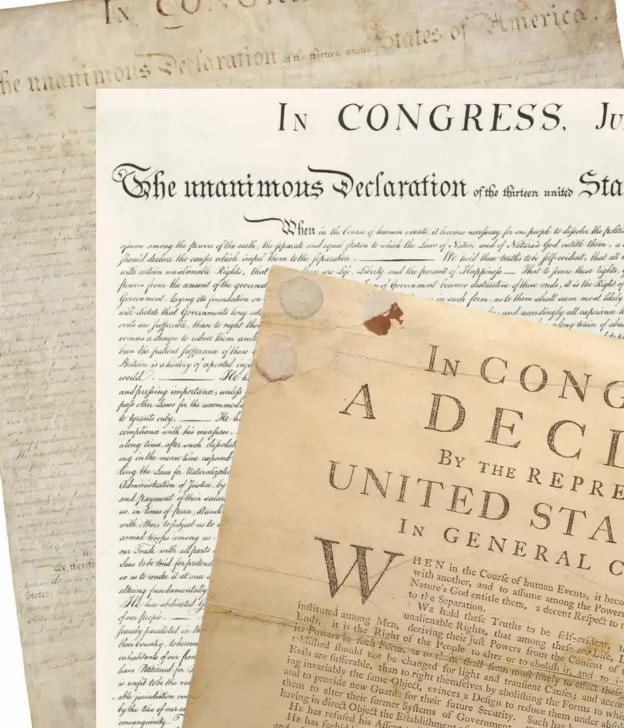
One of the most impressive collections of original founding documents, Lance Banning’s Liberty and Order: The First American Party Struggle [1787] is now available online in .pdf format through Liberty Fund’s Online Library of Liberty.

By Lance Banning

Preface

Within three years of the inauguration of the new federal Constitution, America’s revolutionary leaders divided bitterly over the policies most appropriate for the infant nation. Within five years, two clashing groups were winning thousands of ordinary voters to their side. Within a decade, the collision had resulted in a full-blown party war.

Rise and Fall of Political Parties in the Unit...

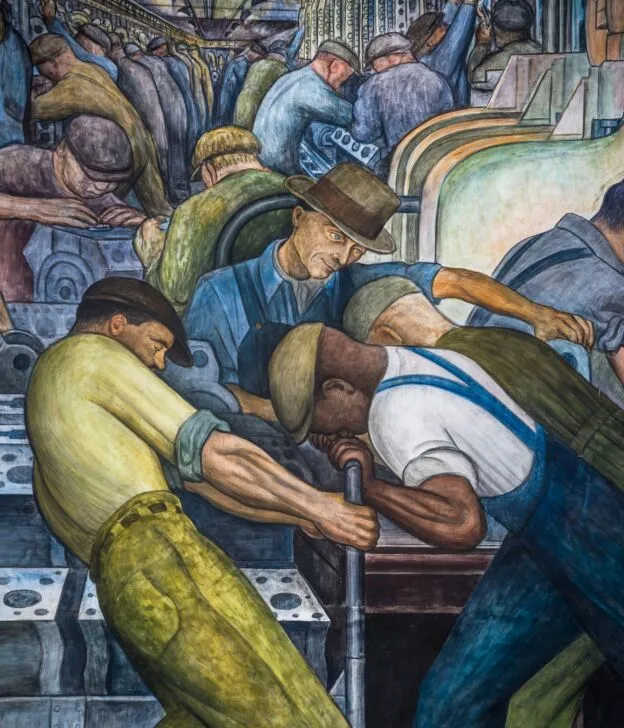
Rise and Fall of Parites

There has never been another struggle like it. These were the first true parties in the history of the world—the first, that is, to mobilize and organize a large proportion of a mass electorate for a national competition. More than that, these parties argued at a depth and fought with a ferocity that has never been repeated. The Federalists and the Jeffersonian Republicans—the friends of order and the friends of liberty as they sometimes called themselves—were both convinced that more than office, more than clashing interests, and more, indeed, than even national policy in the ordinary sense were fundamentally at stake in their quarrel. Their struggle, they believed, was over nothing less profound than the sort of future the United States would have, the sort of nation America was to be. Each regarded the other as a serious threat to what was not yet called the American way. And from their own perspectives, both were right.

This first great party battle is, of course, completely fascinating for its own sake. Between the framing of the Constitution and the War of 1812, the generation that had made the world’s first democratic revolution set about to put its revolutionary vision into practice on a national stage. This generation was a set of public men whose like has never been seen again. Without significant exception, they believed that the American experiment might well determine whether liberty would spread throughout the world or prove that men were too imperfect to be trusted with a government based wholly on elections. In an age of monarchies and aristocracies, they were experimenting with a governmental system—both republican and federal—unprecedented in the world. They had a never-tested and, in several respects, a quite unfinished Constitution to complete. They represented vastly different regions, and they had profoundly different visions of the nature of a sound republic. To understand why they divided and how they created the first modern parties is a captivating object in itself. It is the more worthwhile because not even in the years preceding Independence or during the debate about adoption of the Constitution have better democratic statesmen argued more profoundly over concepts that are at the core of the American political tradition: popular self-governance, federalism, constitutionalism, liberty, and the rest. Perhaps they still have much to teach about the system they bequeathed us, along with entertaining stories of our roots.

No single volume could pretend to be a comprehensive sourcebook on the first party struggle. This one does, however, aim to make it possible to understand the grounds and development of the dispute. For this reason, it is fuller on the earlier years of the struggle, when positions were being defined, than on the later years, when the arguments had become more repetitive and routine. It focuses tightly on the dispute between the parties, not on national questions such as slavery, which seldom entered directly into the first party conflict, or on the development of constitutional jurisprudence in the courts. Although it tries, at several points, to capture something of the flavor of the grassroots conflict, it is weighted, more than some might like, with the writings of major national leaders. But this was very much a conflict that descended from the top, as major national figures developed their disagreements, took them to the public, and reached out for links with local politicians. Debates in Congress were probably the most widely read political publications of these years.

This is not primarily a work for scholars, who will find more-authoritative versions of the texts in sources such as those identified in the bibliography. Rather, to make the materials as accessible as possible, spelling and punctuation have been modernized, obvious printing errors or slips of the pen have been silently corrected, and abbreviations have been spelled out when that seemed useful. So far as seemed possible, nevertheless, the documents are left to speak for themselves. Every volume of this sort must start with an editor’s decisions, the most important of which are those excluding valuable materials because they would not fit between two covers. This, however, is as much or more of an intrusion than I have wanted to make. Editorial introductions are limited to providing identifications or essential context. Elisions are clearly indicated and seldom extensive. In every case, as with the light modernization, they have been done with conscientious concern for the author’s thought and intent.

Several graduate students, two family members, one secretary, and a few undergraduates at the University of Kentucky provided materials for the collection or carried out the tedious job of typing the transcripts. Thanks are due to Todd Estes, Matt Schoenbachler, Colleen Murphy, Todd Hall, Jennifer Durben, Cheris Linebaugh, Lynn Hiler, JoAnne Shepler, and Clint and Lana Banning. A superb group of fifteen scholars from several disciplines devoted two days to a delightful discussion of a preliminary version of the volume at a Liberty Fund colloquium in Lexington in May 1998. In the process, they corrected some mistakes and made some valuable suggestions for additions. John Kaminski, Kenneth Bowling, and Norman Risjord reviewed the manuscript again. Finally, two of my students, Paul Douglas Newman and David Nichols, acted at different times as coresearchers and contributed essentially to making the project a quicker, fuller, and better one. Special thanks are due to them, and the volume is dedicated to them and their peers.

|Full Text|

Enhanced by Zemanta

Free DVD on the History of Liberty

Wednesday, August 25th, 2010

The 5th edition of the Portable Library of Liberty data DVD will be ready for distribution in February 2010. It contains 1,002 full text titles in EBook PDF format, 36 hours of MP3 interviews with classical liberal political philosophers and economists (The Intellectual Portrait Series) and lectures on the thought of Friedrich Hayek (The Legacy of Friedrich Hayek), and a version of our collection of Quotations about Liberty and Power which is designed to run on a data DVD.

This edition of the PLL is not only the 5th edition since the website’s launch in March 2004 but also our 50th Anniversary Edition as Liberty Fund was founded in 1960.

You can request a complimentary copy but please include your snail mail (i.e. postal) address with your request so we can ship it to you, as well as your preferred browser (either Firefox/Safari or IE8). If you have trouble viewing the PLL DVD using IE see this page for help.

Enhanced by Zemanta

Scholars Celebrate Democracy

Wednesday, March 10th, 2010

from the Indiana Daily Student

By KATIE DAWSON

Ten panelists from three different continents spoke about one influential Frenchman.

Alexis de Tocqueville scholars from around the world gathered in the Indiana Memorial Union Walnut Room on Friday  to celebrate the publication of a bilingual, French and English, edition of “Democracy in America.”

“The best work on American democracy was written by a Frenchman,” said Aurelian Craiutu, IU associate professor of political science and director of the Tocqueville program.

Started in 2009, Craiutu’s new program promotes the teachings and ideas of Tocqueville’s interpretation of American democracy. The program offers numerous courses and lectures devoted to Tocqueville’s studies and theories of America.

“This conference is one of the most important events the Tocqueville project will have this year,” Craiutu said.

Many of the panelists from the conference helped compile information for the new edition.

“I realized when I started looking at the Tocqueville papers that I could give him another opinion by showing information that was not shared before,” said Eduardo Nolla of Universidad San Pablo in Madrid, Spain, who helped gather information for the new edition.

The information that Nolla assembled in large part was collected from Yale University, where most of Tocqueville’s documents are located.

“In the book we made sure to include his travel notes, his letter that he wrote to his friends and family, the drafts of his book and his manuscripts,” Nolla said.

Tocqueville, a French political thinker, came to America in the early 1800s to study and document how and why democracy works. The result is his two-volume book “Democracy in America.”

Mark Yellin, an employee of the book’s publisher, the Liberty Fund, came to the conference not only because he has worked with many of the panelists but because he said he was impressed that IU was willing to put on a conference dealing with Tocqueville.

“It is so complex to put something like this together,” Yellin said. “It’s a beautiful volume that took 10 years to create.”

JMC Editor: The conference was co-sponsored by the Jack Miller Center.

ALEXIS DE TOCQUEVILLE: NEW PERSPECTIVES ON HIS WORKS

Wednesday, January 20th, 2010

A ONE-DAY INTERNATIONAL CONFERENCE

ORGANIZED BY

THE TOCQUEVILLE PROGRAM AT INDIANA UNIVESITY,

IN COLLABORATION WITH

THE WORKSHOP IN POLITICAL THEORY AND POLICY ANALYSIS, THE DEPARTMENT OF POLITICAL SCIENCE, AND LIBERTY FUND, INC.

ALEXIS DE TOCQUEVILLE: NEW PERSPECTIVES ON HIS WORKS

March 5, 2010

IU Memorial Union
Indiana University, Bloomington

All meetings are scheduled to take place in the IU Memorial Union, Walnut Room.

THURSDAY, MARCH 4, 2010:

Afternoon: Arrival of participants at the Indiana University Memorial Union Hotel

6:30                Dinner  (Lennie’s)

Friday, March 5, 2010:

9:15-9:30:       Mike McGinnis (IUB): Welcoming remarks: Tocqueville and the Workshop in Political Theory

Aurelian Craiutu (IUB): Opening remarks: The Tocqueville Program at Indiana University

9:30–10:45    Roundtable on the Liberty Fund critical bilingual edition of Democracy in America

Moderator: Aurelian Craiutu

PANELISTS: Eduardo Nolla (Universidad San Pablo-CEU, Madrid), James T. Schleifer (College of New Rochelle), Christine D.  Henderson (Liberty Fund, Inc): Editing, translating, and publishing Democracy in America

10:45–11       Break

11–12:15       Open discussion: The relevance of the Liberty Fund critical edition for the Tocqueville studies.

Moderator: Barbara Allen (Carleton College)

Panelists: Eduardo Nolla, James T. Schleifer

12:15-1.30     Lunch (for panelists): Tudor Room, IU Memorial Union

1:45–3:15      Roundtable Discussion on Tocqueville on America after 1840: Letters and Other Writings (Cambridge University Press, 2009)

Moderator: Russell Hanson (IUB)

Panelists: Aurelian Craiutu (IUB) and Jeremy Jennings (Queen Mary, University of London)

3:15-3:30       Break

3:30-5:00       Roundtable Discussion on Conversations with Tocqueville (Lexington Books, 2009)

Moderator: Filippo Sabetti (McGill University)

Panelists: Barbara Allen (Carleton College), Reiji Matsumoto (Waseda University, Tokyo), Filippo Sabetti (McGill University)

6:30                Dinner (Samira Restaurant)

Saturday, March 6, 2010:

Breakfast and departure at the participants’ convenience.

***

The new Tocqueville program at IU is sponsored by the Jack Miller Center in Philadelphia. For further related events, please see http://www.indiana.edu/~tcqville/

The Liberty Fund bilingual Democracy in America is the fullest historical-critical edition of the Democracy. It includes Eduardo Nolla’s historical-critical edition of the French text and notes on the left-hand pages and James Schleifer’s new English translation on the right. The notes offer an extensive selection of early outlines, drafts, manuscript variants, marginalia, unpublished fragments, and other materials. Features include a translator’s note, list of key terms, foreword, twenty-one illustrations, editor’s introduction, footnotes, appendixes, all works known to have been used by Tocqueville, a bibliography, and French and English indexes.

Reblog this post [with Zemanta]