Don’t Wait for College to Teach the Declaration
May 12, 2026
Teaching the Declaration of Independence offers a challenging yet exciting opportunity for K-12 teachers and students alike. Never had there been a declaration of independence in world history like the one announced in Philadelphia on July 4, 1776. The American Declaration instituted a new genre of political writing—one that has since been imitated by more than 100 countries. Yet teaching the Declaration does much more than introduce students to a new genre of writing.
John Adams famously argued that “children should be educated and instructed in the principles of freedom.” For Adams and virtually all the major Founding Fathers—including the Declaration’s principal author, Thomas Jefferson—the perpetuation of American independence was linked to teaching children the principles articulated in the Declaration of Independence.
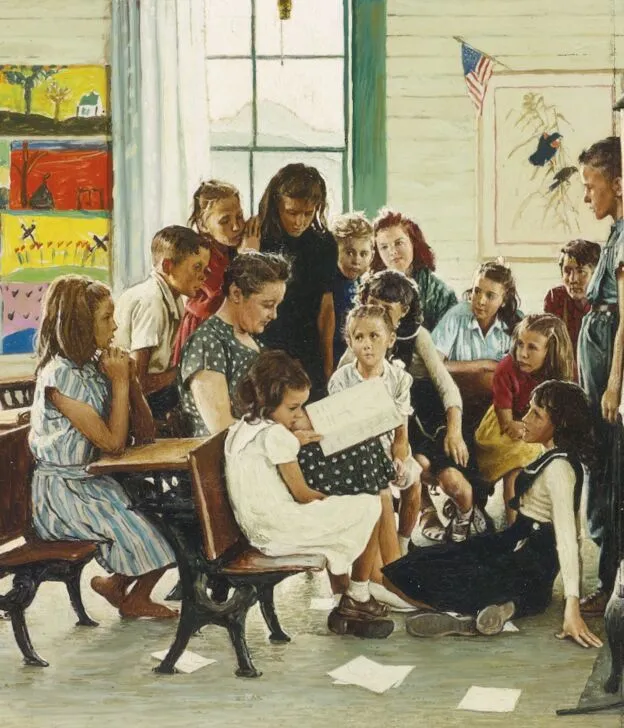
I’ve had the privilege to see the Declaration taught successfully across grade levels and methodologies. I’ve watched as elementary students learned and memorized portions of the Declaration each day. Over time, even students in the early primary grades can memorize and recite the entire first two paragraphs. One key to such an exercise is slowing down and focusing on key vocabulary words and teaching them to students. Even if students cannot understand the meaning of every word, they are learning key words and can recite them all.

John Adams famously argued that “children should be educated and instructed in the principles of freedom.”
Teachers can employ a variety of techniques, such as call-and-response, chants, or setting portions of the text to music to support this process. These exercises serve as an excellent way to begin the school day and cultivate an early affection for the Declaration. Ultimately, helping students think thoughtfully about their past can also help them look forward as informed citizens.
I once came across two fifth-grade students whispering in a hallway. Unsure if they were misbehaving, I approached them, only to discover that they were quietly practicing—with their teachers’ encouragement—their recitation of the Declaration for an upcoming presentation before peers and parents. I was struck by the seriousness with which they approached the task, as well as by the pride they displayed upon accomplishing it.
Secondary students in grades 7–12 can—and should—engage the meaning and philosophy of the Declaration at a deeper level. Two particularly effective methods for teaching older students are seminars and simulations. Teachers must resist the temptation to rely heavily on secondary literature or to impose their own assumptions on the text. Instead, they should read the Declaration aloud with students and ask careful, probing questions in a seminar-style setting. We should seek to understand great authors and great texts—such as the Declaration—on their own terms before attempting to understand them better or differently.
I have taught students who changed their understanding of the Declaration through such an approach. Asking students as a group questions such as “What does it mean that all men are ‘created equal,’ and what is a ‘self-evident truth’?” can spark transformative discussions. I recall when one eleventh-grade student who originally believed humans were not equal changed her opinion. In conversation with her peers, she thoughtfully considered the distinction between the equality of all humans based on natural rights and the inequality humans have based on secondary differences (height, color, intellect, etc.). Seminar discussions allow students to encounter the Declaration almost as if for the first time, assessing its meaning, logic, and key terms for themselves.
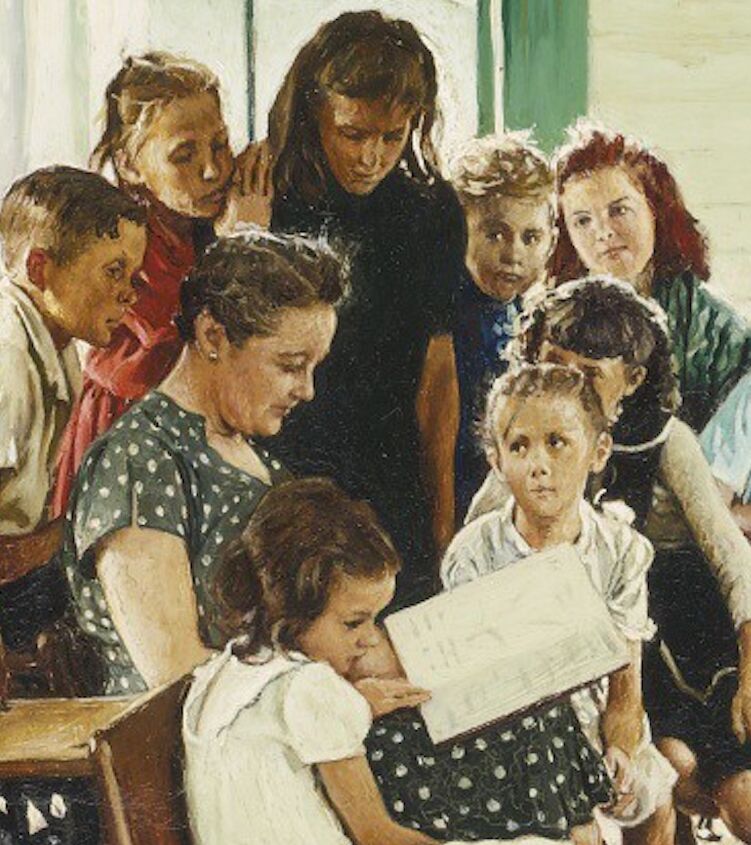
The task of teachers should be both remembrance and rededication to the principles of the Declaration and to teaching those principles to emerging citizens.
Simulations likewise provide a powerful way to engage historical events or documents after they have been studied. Teachers and students can re-create the Second Continental Congress, with students assuming the roles of key figures. In such a simulation, what kind of declaration might students draft, given what the Founders themselves read and studied? As I have learned from leading such simulations, class should conclude with a thoughtful debrief, during which students discuss and reflect on what they learned through the experience.
Finally, it is just as important for teachers to learn the Declaration as it is for their students. How can teachers teach what they themselves do not know? The task of teachers should be both remembrance and rededication to the principles of the Declaration and to teaching those principles to emerging citizens. In doing so, the Declaration can serve—in the words of Abraham Lincoln—as an “electric cord” that connects students to their noble past and “links the hearts of patriotic and liberty-loving man together.”
The Declaration was written, as it states, for a “candid world”—an audience willing to judge fairly and impartially. Likewise, to perpetuate the principles of the American Founding, teachers and students should approach the document candidly, thoughtfully, and joyfully. After all, there is both a great challenge and a great joy in learning our founding principles and embracing our shared responsibility to preserve them for another 250 years.

About the Author
Andrew D. Carico serves as the Jack Miller Center’s Senior Fellow for K–12 Civic Education and was a 2014 Jack Miller Fellow. He is also the Coordinator for the American Classical Lyceum at John Adams Academy, a classical charter school.