
Jefferson and the Declaration
May 12, 2026
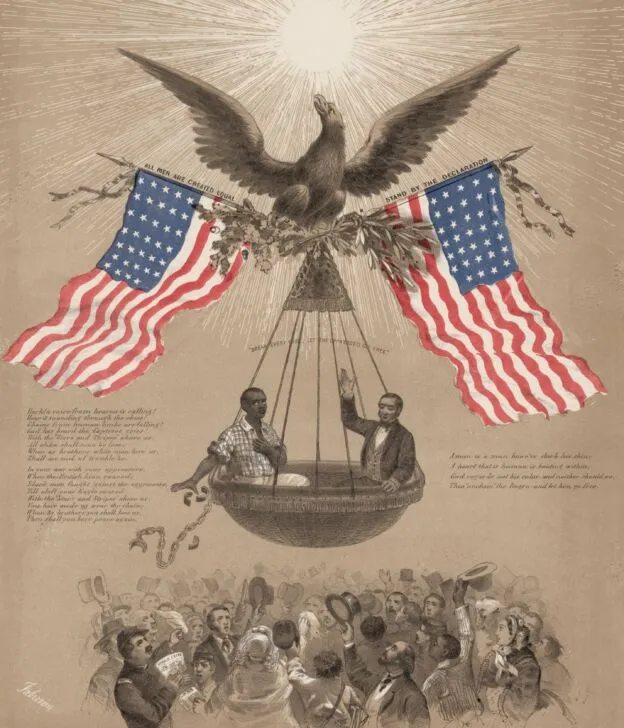
Anytime I teach the Declaration of Independence, I find that the most important question to cover is one that is not actually mentioned in the document itself: slavery. Many students already know that the document’s primary author, Thomas Jefferson, owned enslaved people; and if they don’t already know, they are inevitably shocked to find out. How is it possible, they rightly ask, for a slaveowner to argue that “all men are created equal”? Doesn’t this blatant hypocrisy invalidate the document’s most eloquent pronouncements on human rights?
This most important question can be answered in three ways, like concentric circles that each increase in scope: first, I introduce students to the original draft of the Declaration. Second, we examine the life and writings of Jefferson for more evidence of his beliefs. And finally—my favorite part—we look at the Declaration in global context.
First, my students and I look carefully at the text of the original rough draft, composed by Jefferson over the course of 17 days in the summer of 1776. It contains an entire paragraph condemning the transatlantic slave trade in the strongest terms. Jefferson refers to slavery as “war against human nature itself,” a violation “of the most sacred rights of life & liberty,” an “assemblage of horrors.”
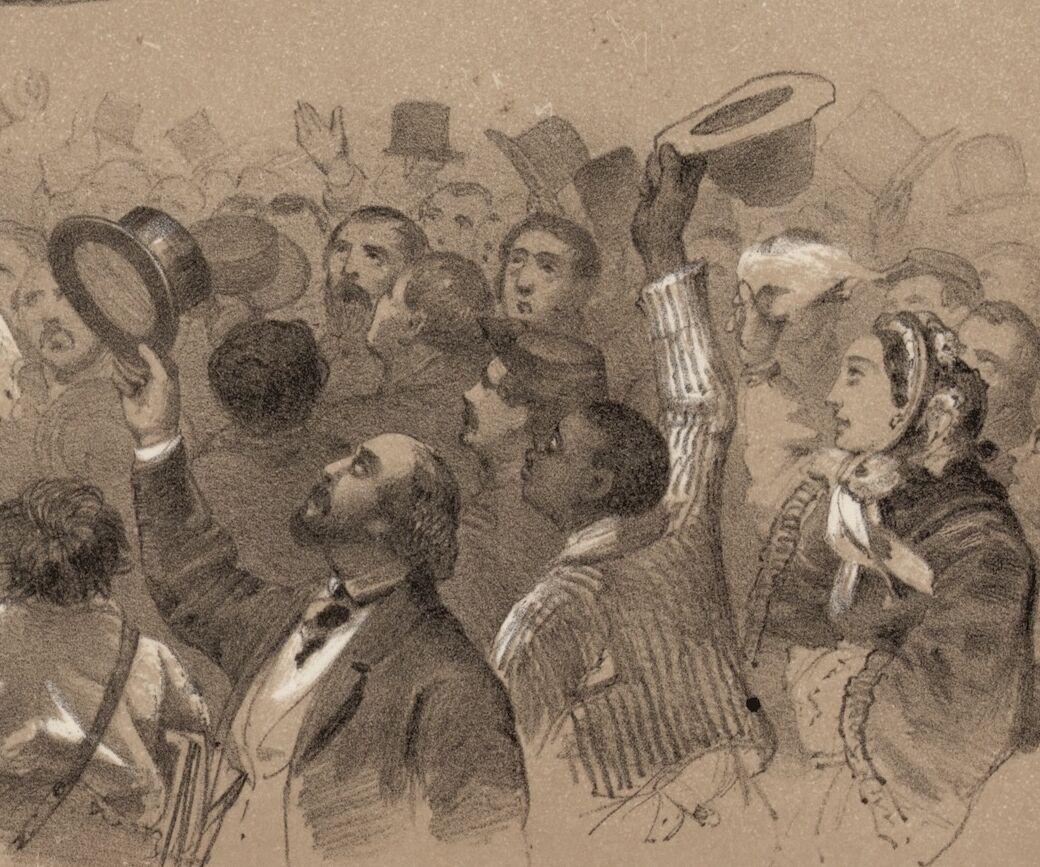
The self-evident truths of the Declaration have inspired not only Americans, but millions more around the globe, just as Jefferson predicted it would.
Most significantly, Jefferson refers to the victims of slave markets—black men, women, and children—as “MEN,” His use of that word sheds brilliant light on the meaning of the phrase “all men are created equal,” since Jefferson clearly understood the word to encompass all human beings—all “people,” not “all white males,” as students sometimes assume.
Why doesn’t the final version of the Declaration contain this paragraph? Because some southern colonies wished to continue the slave trade, and compromise was necessary so the colonies could unify and defeat the British Army. In reading about this compromise, students must face a dark side of democratic government: “it takes time to persuade men to do even what is for their own good.”
Jefferson hated Congress’s edits to his rough draft, partly because by 1776 he had already spent several years taking on pro bono freedom suits as a lawyer, and supporting groundbreaking antislavery legislation in Virginia. Over the next few years, he wrote an antislavery Constitution for Virginia, planned for a future in which no slavery was allowed in new states, wrote an antislavery book, and researched ways to transition Virginia from a slave economy to a free one.
At the end of his life, Jefferson only freed a few people—but because he was heavily in debt, that was all he was legally permitted to do. Perhaps because very few of his antislavery efforts succeeded, history books don’t dwell on these aspects of Jefferson’s life, but they are vital for seeing the whole picture of the Declaration. When students debate Jefferson’s failures, they should know that this flawed man was also a remarkable leader in the fight against slavery, back when that fight was just getting started.
When students debate Jefferson’s failures, they should know that this flawed man was also a remarkable leader in the fight against slavery, back when that fight was just getting started.
The final piece in the puzzle of the Declaration and slavery lies in the Declaration’s global impact over the years. Most Americans (hopefully) know that the Thirteenth Amendment ended slavery in America in 1865. What most probably don’t know is that the language of the Thirteenth Amendment echoes an antislavery proviso from an Ordinance Jefferson wrote in 1784 (it failed to pass by just one vote). They also likely don’t know that slavery was legal almost everywhere in the world in 1776, but Americans began recognizing the gap between their principles and their reality immediately after issuing the Declaration: northern states started emancipating their slaves in 1777, and by 1804 slavery was on the road to extinction in all the northern parts of the U.S.
Abolitionists like Frederick Douglass referenced the Declaration in their arguments against slavery, while Confederates rejected the document entirely, claiming that Jefferson was simply wrong about human equality. Abraham Lincoln famously wrote “All honor to Jefferson—to the man who…introduce[d] into a merely revolutionary document, an abstract truth, applicable to all men and all times.” And it’s true: the self-evident truths of the Declaration have inspired not only Americans, but millions more around the globe, just as Jefferson predicted it would. The world has been changed forever by the idea of human equality, with nations moving from monarchies to republics with astonishing speed in the last 250 years.
And so, it turns out that discussing the question of slavery is one of the best parts of the Declaration of Independence, after all! In this conversation, which must be rooted in careful reading of multiple primary sources, my students and I confront the best and the worst parts of the American national character, democracy, and human nature itself. No conversation could be more worthwhile.

About the Author
Cara Rogers Stevens is an Associate Professor of History at Ashland University; her research focuses on race and slavery in the Jeffersonian Age.