Teaching the Declaration in an Age of Individualism
May 12, 2026
Teaching the Declaration of Independence to American students presents a unique challenge. We are, in many ways, too close to the document. Its assumptions about human nature have shaped our moral anthropology, and its vocabulary of rights has become our political lingua franca. Familiar quotations are repeated so often that they lose their gravity—and with it, their moral force. Students therefore encounter the Declaration as something admirable, selectively memorized, and safely consigned to our history.
Because they presume to know it, they learn very little from it. Yet the Declaration is an education in itself, if we are willing to confront the text directly. Each generation brings to the text modern assumptions which blur its meaning and blunt its power—assumptions that seem obvious precisely because they go unchallenged. For this reason, a proper education in the Declaration must begin by unsettling one’s familiarity. It necessitates a reconsideration of our deepest assumptions about life and political reality.
This is immediately apparent in the classroom. When I ask students what Jefferson intended by “the pursuit of happiness,” they confidently respond: the freedom to decide what makes you happy. The more philosophically inclined suggest, in the same spirit, that government must remain agnostic about the summum bonum, or highest good. In other words, contemporary readers assume that Jefferson enshrined a right to subjective satisfaction—the idea that liberty guarantees personal preference under the banner of happiness.
Yet, this interpretation collapses upon further inspection. For one, the Declaration does not promise happiness itself, but only the pursuit of it, and that distinction is meaningful. As Arthur Schlesinger noted, the word “pursuit” originally meant something closer to vocation or occupation than to subjective seeking. We retain this connotation today when we say that we are pursuing law or medicine. No one who makes such a claim means they are seeking an abstract emotional state; they mean that they are submitting themselves to a demanding course of study, discipline, and practice ordered toward a particular way of life.
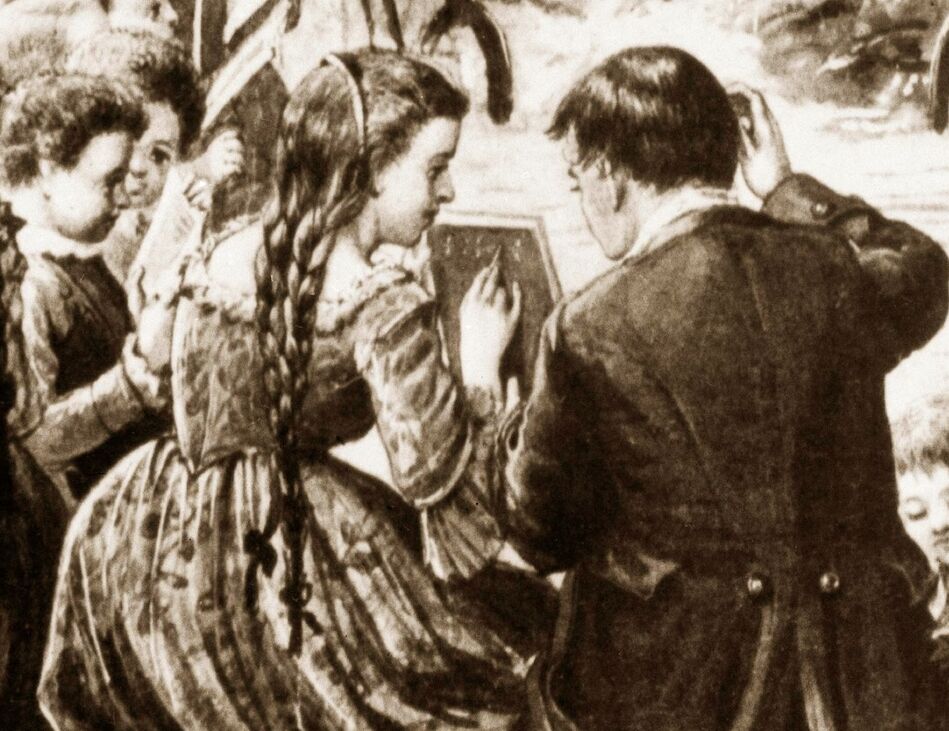
The Declaration is an education in itself, if we are willing to confront the text directly.
Understood in this light, the pursuit of happiness is not a license for instant gratification, but the right to practice human flourishing. Happiness is therefore not reducible to sentiment or preference, but grounded in the human capacity for reason, effort, and virtue. It is no accident that Jefferson’s reported list of sources for the Declaration included not just Cicero, Locke, and Sidney, but Aristotle, whose concept of eudaimonia links happiness to the cultivation of virtue and the pursuit of human excellence.
Seen this way, the liberty promised in the Declaration is not untethered or ethereal, but bound to a particular understanding of law and self-government. Yet, readers often fixate on the Declaration’s lofty opening paragraphs, whose abstract truths speak to our native penchant for liberty, equality, and rights. From this perspective, it’s hard to contextualize the core of the Declaration—the “long train of abuses”— which agonizingly enumerates the particular legal violations of the crown and parliament.
Students do not know what to make of this section, except perhaps to read it as a modern catalogue of grievances or legal oppression. To the contrary, this enumeration of abuses reveals a deep respect for law and a disdain for its corruption. What strikes the students is just how stubbornly procedural are the charges: the obstruction of justice, the revocation of the inherited rights of Englishmen, and the erosion of longstanding self-rule. The Founders understood that a people’s liberty rests not merely on breaking the chains of political power, but in establishing and sustaining the moral and legal conditions necessary for self-rule. Self-government, in other words, presumes the governance of the self.
The moral claims of the Declaration are buttressed by its striking metaphysical claims. It appeals to “the Laws of Nature and Nature’s God,” the “Creator,” the “Supreme Judge of the World,” and “divine Providence”—all of which anchor our individual rights beyond the political. In other words, rights are not conferred by governments, they are grounded in a moral reality antecedent to political authority. It follows from this that the government rests upon the consent of the governed and is legitimate only when it protects and secures one’s natural rights. When a government repeatedly violates that contract, the right of revolution follows not as an act of passion—as in the French Revolution—but rather as the sober conclusion of an inexorable moral logic.
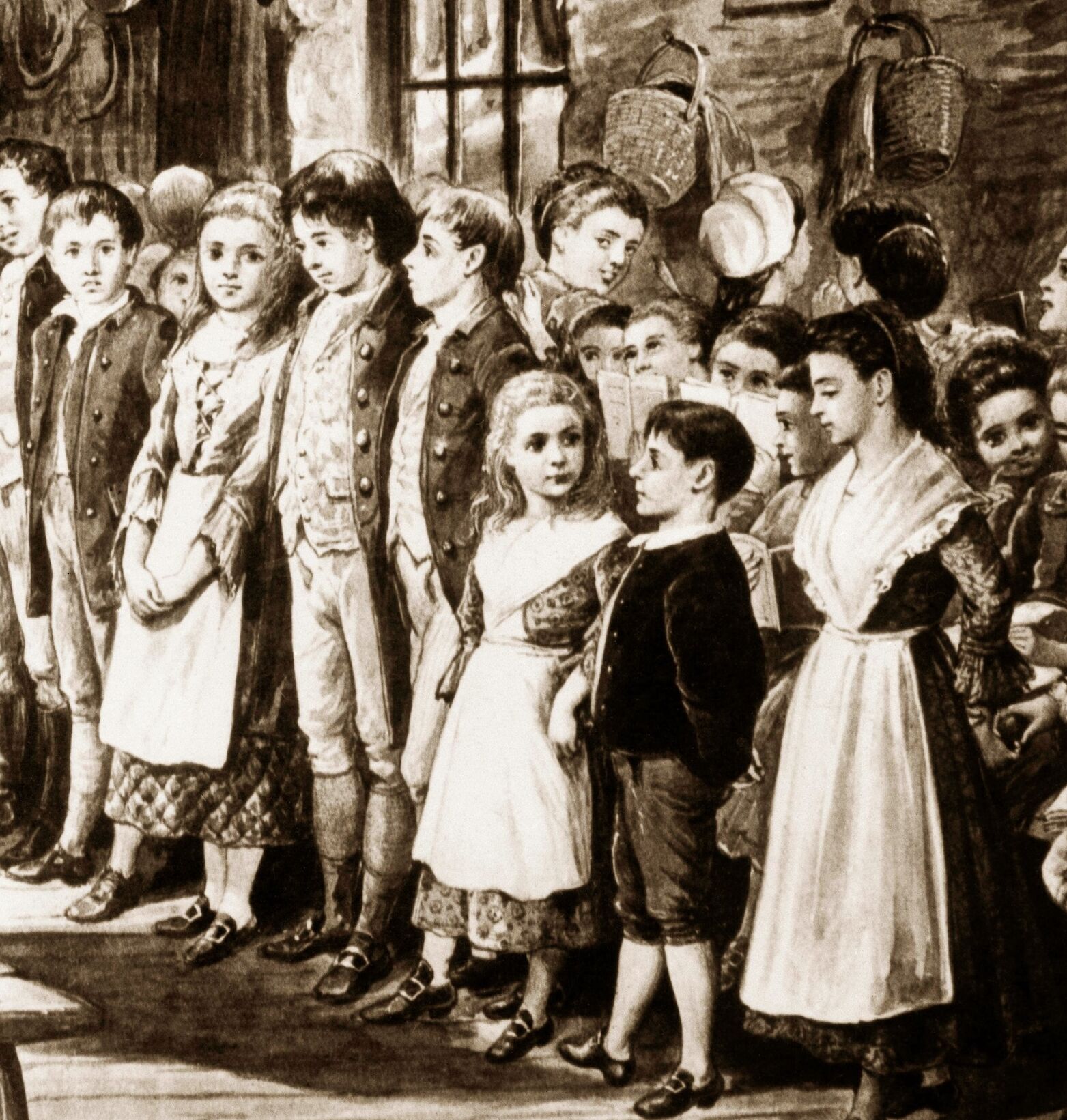
The Declaration’s final lesson, and perhaps the one most foreign to modern readers, is that liberty is inseparable from duty.
This morally serious way of reading the Declaration was already under assault by the early 20th century, when President Calvin Coolidge gave an address commemorating the 150th Anniversary of the Declaration. He warned them—and by extension us—of the ever-present tendency of viewing the Declaration as a relic of its time rather than a statement of ultimate truth. “About the Declaration,” he argued, “there is a finality that is exceedingly restful.” If all men are created equal, if they are endowed with inalienable rights, and if governments derive their just powers from consent, then no progress can move beyond these propositions—only away from them. Regress may be possible, but progress is not. One could deny these truths, Coolidge argued, but what one could not do is improve upon them. In his reading, what made the Fourth of July momentous was not the creation of a new nation, but rather the creation of a nation on new and enduring principles.
The Declaration’s final lesson, and perhaps the one most foreign to modern readers, is that liberty is inseparable from duty. After asserting principles, enumerating legal violations, and justifying their claim to independence, the signers bind themselves with a solemn pledge: “with a firm reliance on the protection of divine Providence, we mutually pledge to each other our lives, fortunes, and our sacred Honors.” This is not a rhetorical flourish. It is a deliberate moral conclusion. While beginning with rights, the Declaration ends with duties. The above phrase is in fact an intentional callback to “life, liberty, and pursuit of happiness,” and it intends to demonstrate that rights and duties are two sides of the same coin. The very rights we claim are secured by our collective willingness to sacrifice our most cherished possessions. Those rights we so cherish rest upon a willingness to defend them—and sometimes at great cost.
For students, this reading can be disquieting. The Declaration does not ask for sentimental reverence or emotional endorsement, it asks for judgment and moral commitment. It invites readers to weigh its claims and decide whether they are universally and finally true—and whether we are willing to live under the obligations those claims impose. In this way, the Declaration treats citizens not merely as entitled rights-bearers, but as moral agents capable of self-government. To teach the Declaration well, then, is not a matter of mere recitation, but of moral formation.
If the words that changed the course of the world are to endure, they must be continually experienced as arguments—and as challenges to our complacency. Are we willing, like that generation 250 years ago, to meet the Declaration with the moral seriousness and sense of duty it demands? Are we willing to defend its principles against the complacent assumption that they have been rendered obsolete by time? If so, may we too pledge that which is dear to us—our lives, fortunes, and our honor—in order to secure once again the conditions of equal liberty and self-government for all.

About the Author
Jacob Wolf is the Director of the Program in American Civilization and Assistant Professor of Politics at the University of Austin. He was the 2022 recipient of the Jack Miller Center’s Award for Excellence in Civic Education.