The Abolitionist Fight for Freedom
Elliott Drago reflects on how the ‘president of the underground railroad’ illuminates our founding principles.
October 15, 2026
Being an American means being someone who can, through toil and sacrifice, embody freedom, even if for a moment. We have a civic duty to mine and proclaim these moments of freedom from our shared American past. Thankfully, American history offers many opportunities to witness and celebrate how the ideal of freedom continues to form a more perfect union. For example:
The Founders affixing their signatures to the Declaration of Independence, a bold liberating act that meant risking their lives, fortunes, and sacred honor.
A wartime president gazing somberly across the scarred landscape of a battlefield, reflecting on what it meant for the fallen to give their last true measure of devotion in the name of freedom.
Men and women marching arm in arm, singing songs of liberty while pursuing their civil rights.
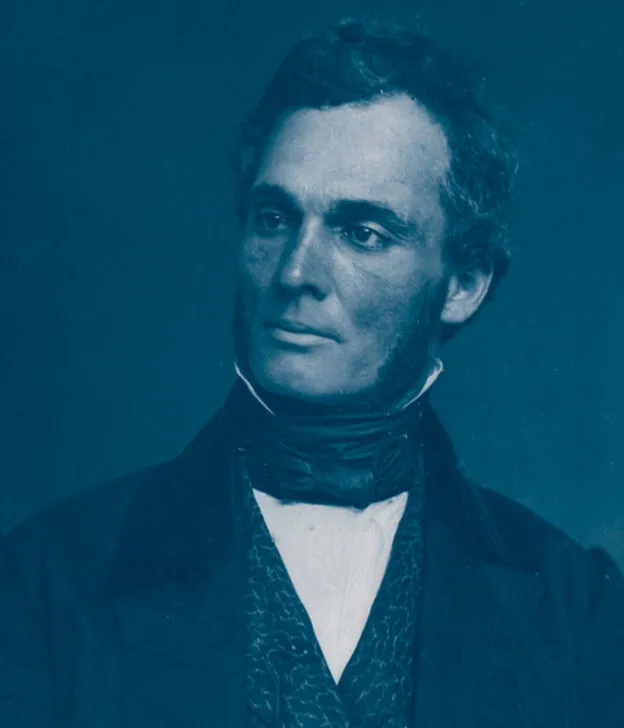
Americans can use their own history to embody freedom and have many role models to emulate and inspire future generations. One such role model was the abolitionist Robert Purvis.
Robert Purvis was born in Charleston, South Carolina, in 1810 to the white Scottish cotton merchant William Purvis and Harriet Judah, a mixed-race free woman whose own mother was kidnapped from Africa as a girl. When Robert was nine, the family relocated to Philadelphia. After his father’s untimely death, sixteen-year-old Robert inherited a sizable portion of his estate, which he soon parlayed into real estate investment in Philadelphia.
While most Americans remember Philadelphia as the birthplace of the republic, Philadelphia during Purvis’s time seemed more southern than northern. Many of the city’s leading families had ties to southern slaveowners, whose cotton crops became textiles in Philadelphia factories. The Democratic party machine of Philadelphia encouraged the workers in these factories, many of whom were poor and uneducated immigrants fresh off the boat from Ireland, to view Black Americans as subhuman or worse, with dire consequences. Egged on by law enforcement, roving gangs of young Irish men and boys took great delight in harassing the Black community. Meanwhile, corrupt local constables and aldermen conspired with southern slaveholders to falsely claim Black Americans as “fugitives” from slavery—or outright kidnap them—sending them to the killing fields of the South.
To combat such atrocities and safeguard the dignity and freedom of Black Americans, Robert Purvis threw himself into several reform-minded causes in the city, the most important of which was the abolitionist movement.
A few critical connections led him to this activism. Purvis felt electrified by a speech delivered by the Quaker abolitionist newspaper editor Benjamin Lundy in 1828, who committed himself to the immediate emancipation of all enslaved people. Additionally, the successful Black Philadelphia sailmaker James Forten served as a mentor and eventual father-in-law to Purvis. Forten’s sense of civic duty impressed Purvis: Forten fought in the American Revolution, helped fund the city’s defense during the War of 1812, and spent a significant amount of his wealth benefiting the Black community by supporting cultural institutions, intellectual societies, church renovations, and even protecting runaways that were a constant presence in Philadelphia. These two dedicated, generous men inspired Purvis to build his civic career centered on the founding principle of freedom.
Purvis spoke and wrote publicly to his fellow Americans, decrying colonization efforts to ship Black Americans back to Africa, clamoring for Black education and voting rights, and commenting on political affairs. Purvis was a founding member of the American Anti-Slavery Society and helped organize its inaugural convention in Philadelphia in 1833. Echoing the Declaration of Independence’s promises, the attendees drafted a “Declaration of Sentiments,” and vowed to do everything in their power to end slavery.
Purvis’s role in the abolitionist cause extended beyond words as he aided runaway slaves. In one instance, he galloped across the region to find legal counsel for Basil Dorsey, a Black man accused of being a runaway. Purvis also gathered a large group of Black Americans to attend the trial proceedings and liberate Basil from the slavecatchers if the trial did not turn out favorably.
The case against Dorsey was dismissed, but Purvis’s vigilance did not end there: rather than riding home immediately, he personally escorted Dorsey out of the courthouse, where once again the slaveholders attempted to kidnap the man as he mounted Purvis’s horse. The quick-thinking Purvis loudly cracked his horsewhip, and Dorsey rode off northward, as the Black crowd exploded with applause. While not all of Purvis’s rescues were quite as dramatic, he consistently embodied an American intent on realizing the founding principle of freedom.
Inspired by the Dorsey case and others, Purvis co-founded the Vigilant Association of Philadelphia in 1837. The organization often met at Purvis’s home and aided hundreds of Black Americans fleeing from slavery, providing food, shelter, and money as well as the names and addresses of friendly abolitionists. Over time, the Vigilant Association grew to about 1,000 members, becoming a vital hub in the Underground Railroad. In 1842, the association marched down Lombard Street, Philadelphia, holding a flag emblazoned with “Liberty or Death.” White bystanders who observed the parade soon grew restless and attacked the marchers. A three-day race riot ensued, in which white Philadelphians assaulted Black Philadelphians and torched Black homes, businesses, and cultural sites.
As the rioters targeted Purvis’s home, he sat on the stairs with a rifle, waiting and hoping that the mob would not break through the door. Fearing for the safety of his family, Purvis moved about 10 miles north of the city to his farmstead in Byberry and burnt all his notes from the Vigilance Association to hide his activities.
Purvis’s home in Byberry functioned as another station on the Underground Railroad where Purvis and his family actualized the founding principle of freedom by rescuing Black Americans on the run from southern slaveholders. His work as an Underground Railroad station master continued in the following decades and throughout the Civil War. He urged his fellow Americans to fight for freedom “until slavery goes down so effectually that about it we can have no question or doubt.”
The founding principle of freedom never left Purvis’s mind. He presided over the 50th anniversary of the founding of the American Anti-Slavery Society in 1883. A living legend, Purvis’s name was uttered with reverence: here was a person who belonged in freedom’s pantheon alongside Lincoln, Garrison, Douglass, and Tubman. He was, after all, christened by his colleagues as the “President of the Underground Railroad,” and personally oversaw the liberation of hundreds of Black Americans who fled slavery.
At the anniversary convention, a platform at the front of the room displayed relics from the hellish era of slavery. Attendees gathered around the wooden objects and pored over each one in turn: a box that once contained a young Black woman fleeing slavery in Baltimore. Crammed “in darkness and peril,” she remained in that position for 18 hours as the freight vessel sailed to Philadelphia so that she could be “borne to Freedom;” an auction block from New Orleans, “a silent testimony to the barbarism passed away;” and the table and inkstand, “sacred to liberty,” from the original 1833 meeting, upon which Purvis and his fellow abolitionists drafted their Declaration of Sentiments.
These objects embodied how Purvis and his friends succeeded in performing their civic duty to end the war over slavery in the United States. “They were men and women who believed in, and were loyal to, the grand principles of our American Declaration of Independence,” Purvis explained. They certainly encountered resistance, but these principles were never defeated. Life, liberty, and the pursuit of happiness were made real in the person of Robert Purvis. Through his work as a speaker, writer, reformer, and most importantly, president of the Underground Railroad, he exemplified the highest form of civic duty: the founding principle of freedom.

About the Author
ELLIOTT DRAGO is the Jack Miller Center’s Resident Historian and Manager of Network Engagement for our network of more than 1,400 scholars. He is an expert on the struggles over slavery and freedom during the Early Republic.