The Declaration Heard ‘Round the World
May 12, 2026
In 1837, Ralph Waldo Emerson wrote “concord Hymn,” the poem in which he famously referred to the 1775 battle at Old North Bridge in Concord, Massachusetts, as “the shot heard round the world” because it initiated what would become the eight-year American Revolutionary War against Britain. Even more widely heard around the world was the Declaration of Independence that followed on July 4, 1776. The men who signed the Declaration could not have dreamed of the influence it would have in the founding documents of more than 100 countries, from Haiti in 1804 to Eritrea in 1993.
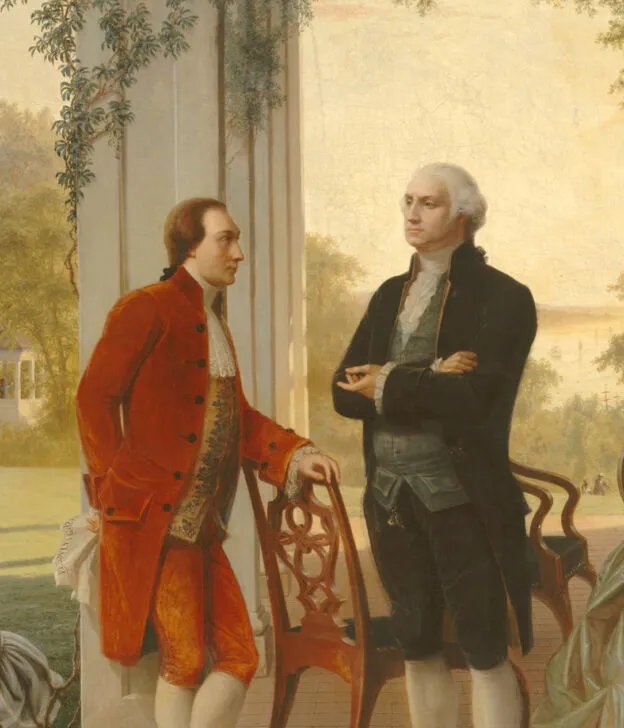
Many of these descendants of our Declaration invoke or refer to the “self-evident” truths “that all Men are created equal, that they are endowed by their Creator with certain unalienable Rights, that among these are Life, Liberty, and the Pursuit of Happiness.” Perhaps the best-known example is the French Declaration of the Rights of Man and of the Citizen (1789), which declares that “Men are born, and always continue, free and equal in respect of their rights,” which are “natural, imprescriptible, and inalienable.” The similarity is no accident. Thomas Jefferson wrote the first draft of our Declaration and, as our ambassador to France, was at the elbow of the Marquis de Lafayette when he wrote the first draft of the French counterpart.
More surprising is the Declaration of Independence of the Democratic Republic of Vietnam, proclaimed by Ho Chi Minh on September 2, 1945, on the day that Japan signed the Instrument of Surrender aboard the USS Missouri. Ho’s declaration quoted verbatim the passages set out above from both the American and French declarations. But Ho had by then long been a committed communist, so it is sensible to think of his declaration not as having been influenced by those predecessors but rather as showing that Ho correctly understood the appeal that the concepts of liberty and equality would have to the Vietnamese people. Indeed, it is the aspirations of people everywhere for liberty and equality that have animated scores of revolutions since 1776.
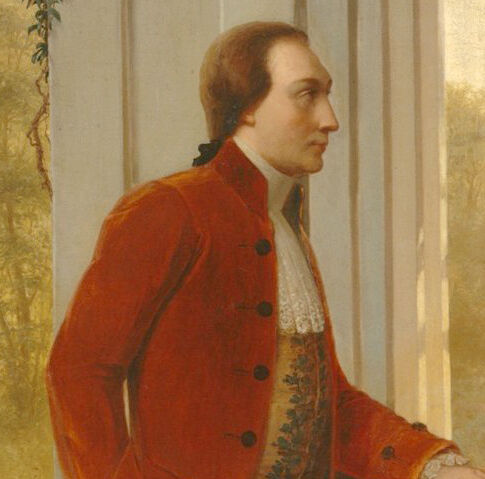
The men who signed the Declaration could not have dreamed of the influence it would have in the founding documents of more than 100 countries.
Another feature of our Declaration that has been replicated is the list of 27 grievances our Founders had against the British Crown and Parliament. They listed those grievances, they said, because “a decent Respect to the Opinions of Mankind requires that they should declare the causes which impel them to the Separation.” Vietnam’s declaration similarly accuses France of political oppression, economic exploitation, and social degradation in a myriad of ways. The Declaration of Independence of Brazil (1822) follows suit, addressing the King of Portugal at length about the abuses imposed by “the Brazilian government put in place by Your Majesty,” many of which had to do with the practice of slavery.
The Czech Declaration of Independence (1918), known as the Washington Declaration because it was drafted there, duly recites a list of grievances against the Habsburgs, whose Austro-Hungaria Empire, of which Czech and Slovak lands had been a part for 400 years, was collapsing. President Woodrow Wilson had demanded that its peoples be able to determine their own futures. The Declaration expressly appeals to Wilson by reciting, “We accept the American principles as laid down by President Wilson [in his Fourteen Points for the post war era]: the principles of liberated mankind, of the actual equality of nations, and of governments deriving all their just power from the consent of the governed,” the last clause, of course, being a direct quotation of the American Declaration.
The Czech’s express appeal for American support also had its counterpart in the implicit appeal in our Declaration for the support of other nations phrased as “a decent respect for the opinions of mankind.” The colonists themselves did not need to be reminded of their own grievances; they had been at war with Britain for 14 months.
Our Declaration introduced into practice a new way of conceiving government, as the guarantor, not the source, of the rights of mankind.
In 1776, Britain not only ruled the American colonies, it also “ruled the waves” worldwide. It therefore had many adversaries, including not only France but also Spain, Russia, Poland, and the Netherlands. Following the Battle of Saratoga in 1777, where Washington decisively defeated the British, all of them came to the aid of the incipient United States. In what may properly be viewed as a world war, Britain was supported only by Hesse, from which it rented mercenary soldiers, and by many Indian tribes in the colonies. France fought Britain not only at Savannah, Chesapeake Bay, and Yorktown but also in the West Indies, South America, India, Africa, and—together with Spain—at Gibraltar. Meanwhile, Russia cheered from the sidelines, refused British pleas for support, and figured that Britain’s defeat might be advantageous to Russian interests in Alaska and on the West Coast.
In sum, our Declaration of Independence came into being in part as an appeal to other nations and thereafter served as a model for declaring the overthrow of governments and empires everywhere. It was invoked in the Bolivarian revolutions against Spain, the collapse of the Russian, German, Austro-Hungarian, and Ottoman Empires at the end of World War I, the worldwide decolonization that followed World War II into the 1960s, and even the breakup of the Soviet Union into 15 nations in 1991. Our Declaration introduced into practice a new way of conceiving government, as the guarantor, not the source, of the rights of mankind, dependent upon the consent of the governed. Its influence and its appeal spread around the world from the outset, making America the very symbol of liberty and equality even in excess of its reality.

About the Author
Douglas H. Ginsburg is a senior judge on the U.S. Court of Appeals for the District of Columbia Circuit. He is a law professor and member of the Jack Miller Center’s National Civics Council.