

The Declaration in the American Legal Tradition
May 12, 2026
The Declaration of Independence was the moment when the United States came into being, and it did so in a unique manner: justified by universal principles of political morality. It was by violating these principles, the Continental Congress argued, that the English monarch had lost their allegiance. Many of these same statesmen would become the Framers of the future government of the United States of America, as outlined in the Constitution.
But it is important to recognize the difference between these two foundational documents. The Constitution details the federal government’s powers, its relationship to the states and their relationship to each other, key rights of citizens, and constitutional principles that organized America’s legal system. The Constitution is legally binding: it practically orders how American officials and citizens live well together. It is here that the two founding documents depart.
While crucial as the justification for independence, the Declaration of Independence is not constitutionally operative today; that is the Constitution’s job. What the document did do was proclaim the colonies as independent from the rule of Great Britain. The men who signed it were fully prepared to defend the proclamation with action, and many Americans died for the ideas expressed within. It served as a profound expression of the colonist’s desire for independence and the ability to decide their own rules for self-governance. All the same, it was not an expression of constitutional law as such.

In both constitutional practice and legal academia, appeals to the Declaration show the continuing role of the Declaration’s principles in our constitutional tradition.
To say that the Declaration is not constitutionally operative does not discount its central importance to the American constitutional tradition. Quite the contrary: the Declaration is essential to our constitutional tradition. Primarily, the Declaration serves as an expression of America’s political principles. It proclaims the unalienable rights that belong to all people. Moreover, the Declaration also announces the right of citizens to reject a government that fails to secure the common good.
This is where the Declaration of Independence is most helpful, constitutionally speaking: outlining America’s political principles. It was these principles that the Founders sought to implement in the Constitution. Thomas Jefferson suggested this when he wrote, “this was the object of the Declaration of Independence…it was intended to be an expression of the American mind, and to give to that expression the proper tone and spirit called for by the occasion.” President Abraham Lincoln likewise noted that the principle of American “liberty to all” traces back to the Declaration of Independence.
These principles persist today. In both constitutional practice and legal academia, appeals to the Declaration show the continuing role of the Declaration’s principles in our constitutional tradition. Chief Justice John Roberts quoted the Declaration of Independence in the opinion for SFFA v. Harvard, both President Trump and President Biden employed its ideas to support their actions, and leading scholars like Professor Randy Barnett argue that the Declaration serves as the true founding document for the Nation.
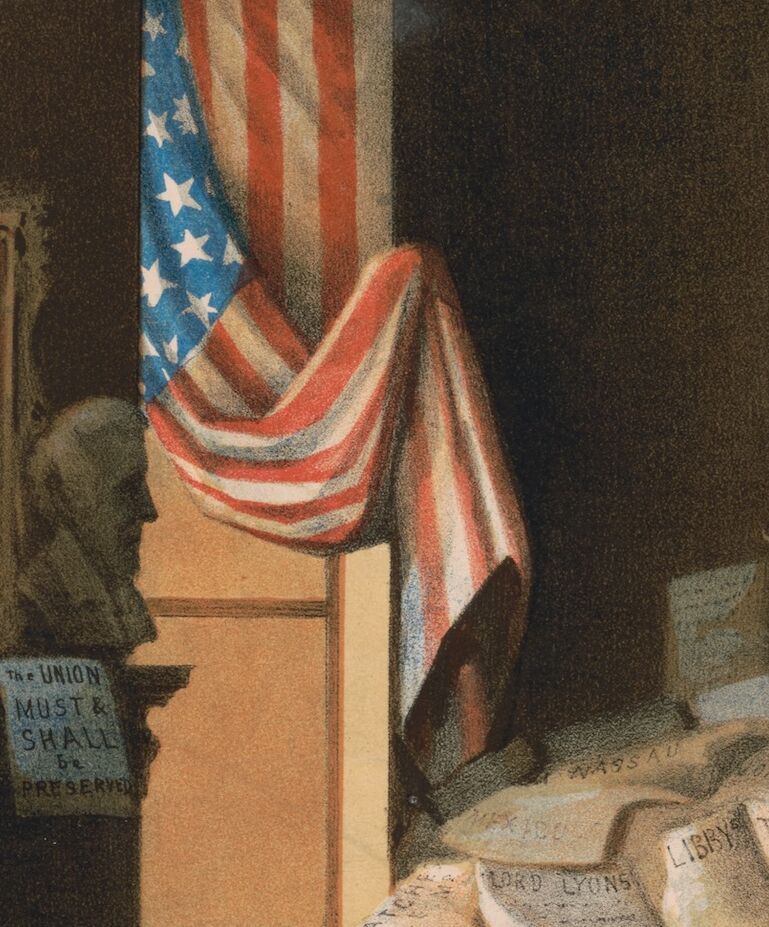
Even though the Declaration is not constitutional law like the Constitution, it informs both the Constitution and Americans’ political life.
The influence of Declaration’s principles also extends beyond the national government to the states. Similar to the United States as a whole, states strongly enforce the rights of their citizens and the self-government by their peoples. For example, the first words in Ohio’s Constitution mirror the Declaration’s, declaring that “All men are, by nature, free and independent, and have certain inalienable rights.” The state’s highest court has even explored these similarities, noting that “language in Section 1, Article I of the Ohio Constitution, in many ways, mirrors the precatory words of the Declaration of Independence.”
The legacy of the Declaration of Independence is as vitally important today as it was 250 years ago. Its principles persist in both national and state constitutionalism and illustrate what it means to be American. Even though the Declaration is not constitutional law like the Constitution, it informs both the Constitution and Americans’ political life. Today, like 250 years ago, that identity holds power to shape a brighter future built on the Declaration’s enduring principles.

About the Author
Lee J. Strang serves as the inaugural executive director of the Salmon P. Chase Center for Civics, Culture, and Society at The Ohio State University. He is a member of the Jack Miller Center’s Academic Council.