The Making of the American Mind
The Story of our Declaration
May 12, 2026
We must know the Declaration if we truly are to love America.
Having rejected the Old World’s rule of accident and force in favor of government by reflection and choice, the American Founders understood education— heretofore an elite privilege of the upper class and often a tool of state control—to take on a new civic role in service to popular government.
In a republican regime, built on equal rights and the consent of the governed, education not only shapes the private character that allows the individual to govern the self but also imparts the principles necessary for those individuals to practice the arts of self-government. The student is transformed into the citizen through the expansion and deepening of the natural attachments as well as the cultivation of the civic knowledge necessary to perpetuate free government.
Education begins at home, when the habits and manners are established, first by parents, who have the primary responsibility for the upbringing of their children, and then by family, church, community, and the first lessons of early instruction. Like the great nations of Europe, Noah Webster maintained that the formal educational system to be adopted and pursued in America should focus on the foundations of knowledge: reading, writing, and arithmetic, as well as a basic understanding of the sciences and the outlines of geography and history.
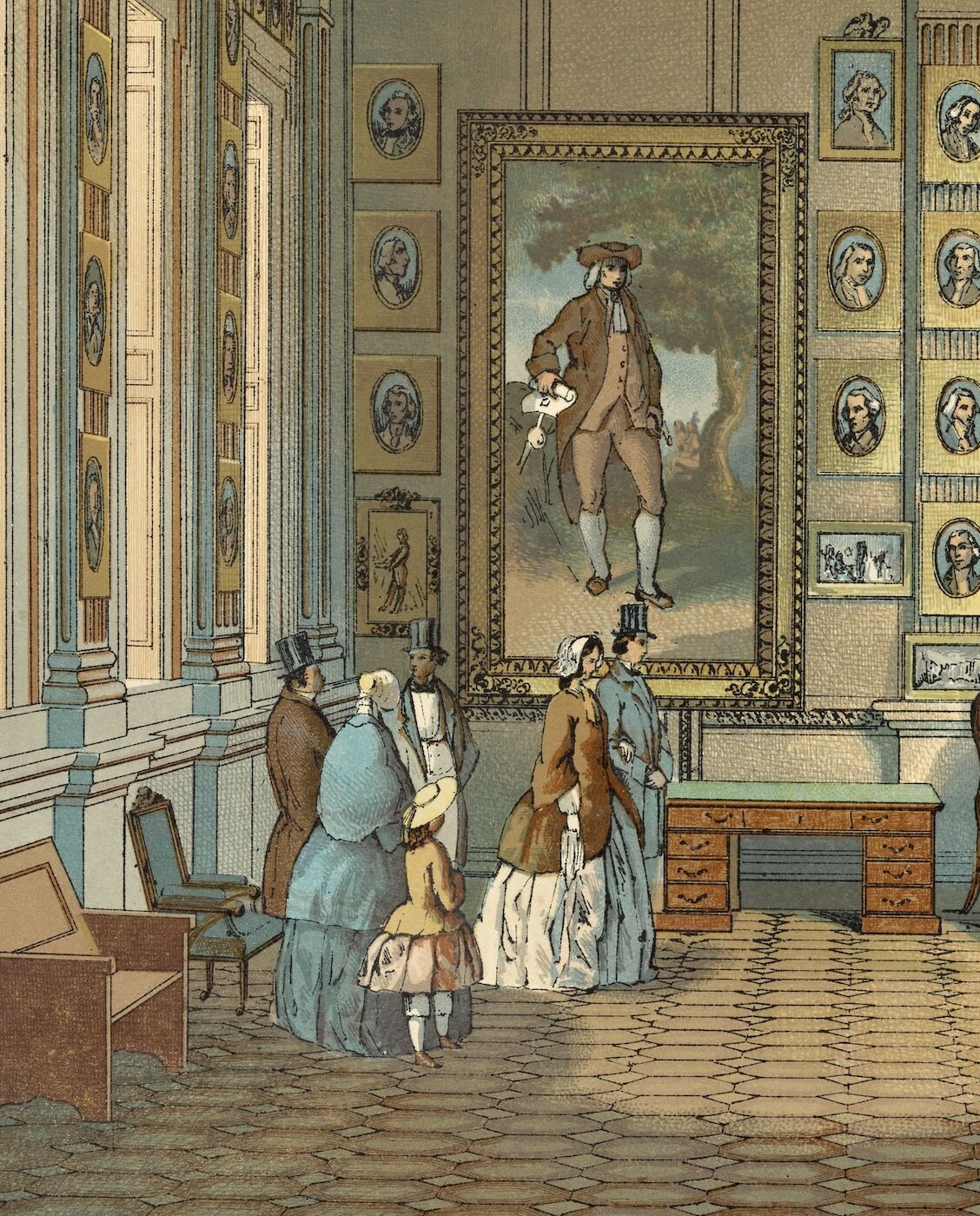
The document around which this citizen education was to be constructed, the creed of America’s civic life and political identity, its temporal scripture and its epic poetry, was the Declaration of Independence.
But in republican America, Webster argued that popular education must also “implant, in the minds of the American youth, the principles of virtue and of liberty; and inspire them with just and liberal ideas of government, and with an inviolable attachment to their own country.” At a young age, this inculcation was especially to be done by teaching history.
Thomas Jefferson and James Madison concurred in a report they authored as commissioners of the University of Virginia. Beyond improving the faculties and morals, the objects of a general education should be for the student “to understand his duties to his neighbors and country, and to discharge with competence the functions confided to him by either,” and “to instruct the mass of our citizens in these, their rights, interests and duties, as men and citizens.” The objects of “the higher branches of education”—the colleges and universities scattered around the country—were “to develop the reasoning faculties of our youth, enlarge their minds, cultivate their morals, and instill into them the precepts of virtue and order” and “to form them to habits of reflection and correct action, rendering them examples of virtue to others, and of happiness within themselves.” American higher education should “form the statesmen, legislators and judges, on whom public prosperity and individual happiness are so much to depend.” Colleges and universities, too, had an obligation to make good citizens.
And the document around which this citizen education was to be constructed, the creed of America’s civic life and political identity, its temporal scripture and its epic poetry, was the Declaration of Independence.
The Declaration is the defining act of the great drama that is the American Founding. When Jefferson and Madison outlined an educational curriculum with “especial attention to the principles of government which shall be inculcated therein,” their first reading was the Declaration, which Jefferson called “an expression of the American mind.” It is what the ancients described as the prelude to the laws, meant to define the regime and animate what is to come.
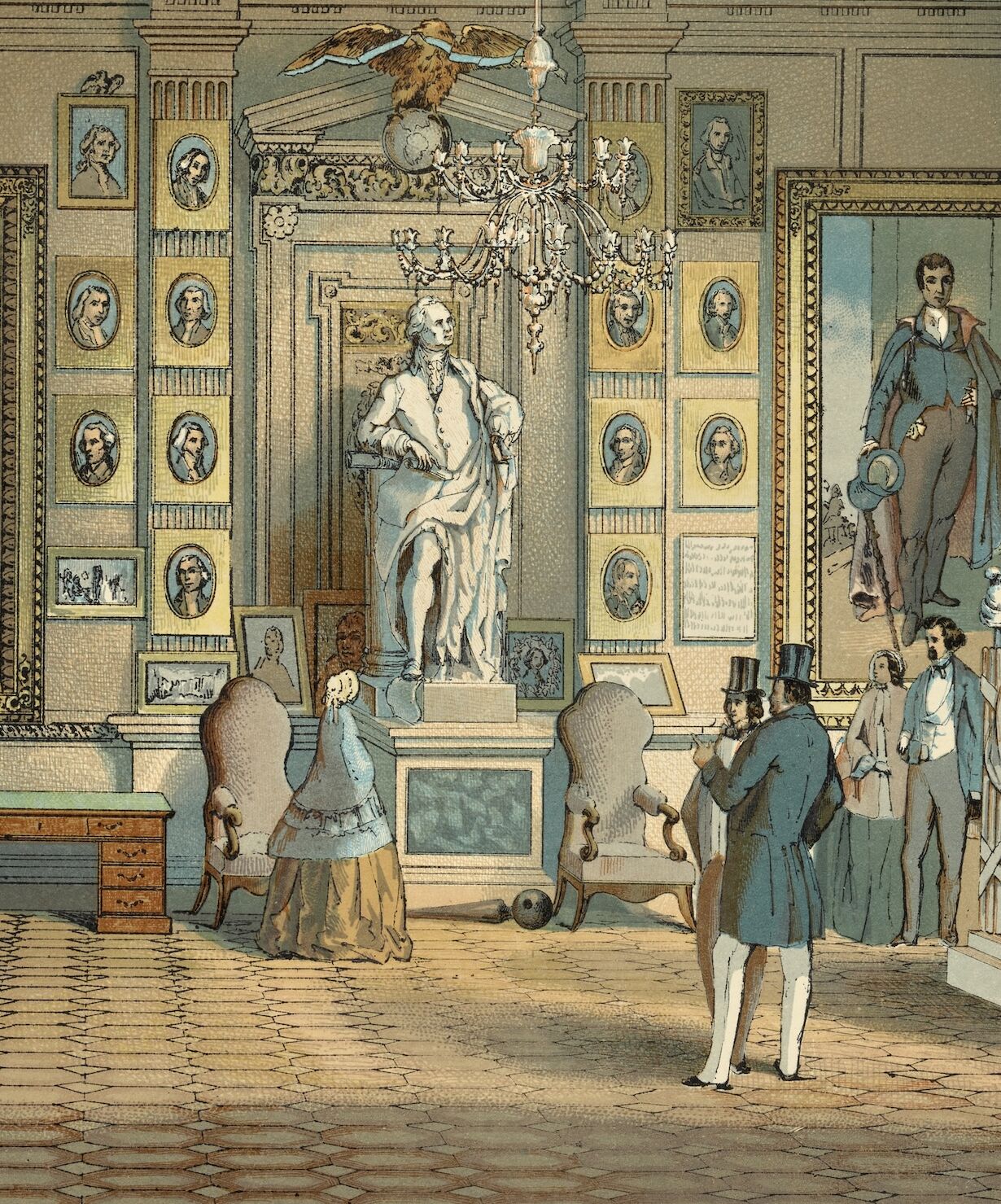
We should approach the document like a great symphony, composed of different movements, different sounds and rhythms, yet all in harmony, forming one complete work.
Although a “merely revolutionary document,” the Declaration of Independence contains, as Abraham Lincoln wrote on the eve of Civil War, “an abstract truth, applicable to all men and all times,” put there “that to-day, and in all coming days, it shall be a rebuke and a stumbling-block to the very harbingers of re-appearing tyranny and oppression.”
Lincoln also said once that public opinion “always has a ‘central idea,’ from which all its minor thoughts radiate.” America’s central idea is the Declaration, and everything else radiates from that.
The Making of the American Mind is the story of the making and meaning of the Declaration, of how in the summer of 1776 a band of iron men from thirteen separate colonies banded together and declared independence from—and declared war against—the most powerful nation in the world. It also recalls how the American mind, years if not decades in the making, came to be written down in that way, and expressed in the Declaration’s powerful words.
Rather than focusing on one aspect or emphasizing one person, as is usually the case, this work is a commentary on the Declaration as a whole, allowing its narrative, and its argument, to unfold on its terms, as the Continental Congress understood itself to be speaking to “the opinions of mankind.” We should approach the document like a great symphony, composed of different movements, different sounds and rhythms, yet all in harmony, forming one complete work.
It was Augustine who pointed out long ago that nothing can be truly loved unless the object of love is known, known in its nature and its very being. By defining our common loves—our native country and our common commitment to republican government based on equal rights, political liberty, and the consent of the governed—the Declaration unites our hearts and our minds in a civic friendship of enlightened patriotism. We must know the Declaration if we truly are to love America.

About the Author
Matthew Spalding is the Kirby Professor in Constitutional Government at Hillsdale College and the Dean of the Van Andel Graduate School of Government at Hillsdale College’s Washington, D.C., campus.