
John Dickinson and the Formation of the American Identity
Dickinson was the first founder to describe the American Identity, writes Jane Calvert.
October 15, 2026
Founder John Dickinson was the first to explain to the colonists what it meant to be an American. In his famous Letters from a Farmer in Pennsylvania (1767–68), he clarified their unique identity and encouraged them to unite on that basis to resist unjust British taxation. Just as they provided a foundation for the Declaration of Independence, these values still resonate today.
In the 1760s, the idea of a distinct American identity was new for the colonists. Before then, they mostly thought of themselves as Britons; “American” was a geographical description, not a national one. But with their fundamental rights in jeopardy, Dickinson encouraged his countrymen to join him in the patriotism he had felt for his native land since he was a young man.
While in London for legal training in his early twenties, 3,500 miles from his native land, Dickinson was homesick. But more than simply missing his parents and the familiar routines of their family farm in lower Pennsylvania, he missed America. From his vantage point in the metropole, he observed in correspondence at the time, “America is to be sure a Wilderness, & yet that Wilderness to Me, is more pleasing than this charming Garden.” He loved everything about it, even what others would consider disadvantages. “Tis Rude,” he admitted, “but it’s innocent. Tis wild—but it’s private. There Life is a Stream pure & unruffled . . . There We enjoy Life . . . And indeed, till I see it again, I shall not be so happy, as I think it possible to be on Earth.” Moreover, he also began to sense that people from that region possessed specific characteristics. As the decadent diversions of London beckoned him and other young Americans to abandon their legal studies, he said, “[We] are resolvd to remember We are Americans—to live soberly & prosecute our Business.” For Dickinson, to be American meant to be virtuous.
When he wrote his Farmer’s Letters a decade later, his patriotism had only grown. He had spent that time defending the rights of the most vulnerable people in his colony, both in the court room and the legislative chamber; he knew the local laws and the British constitution better than anyone. With Great Britain violating both, Dickinson felt compelled to defend his countrymen. In doing so, he shared more than his legal expertise; he shared his understanding of what makes an American. He urged the colonists to let their “ingenuity, industry, and frugality” lend credibility to their protests. The “cause of liberty” should be defended peacefully with the virtues Americans possessed: “prudence, justice, modesty, bravery, humanity and magnanimity.” He believed Americans “in general are more intelligent than any other people whatever,” including the working people, who may not have time to become educated about their rights. Their “goodness of disposition” inclined them to trust the British government too much. He thus sought to educate even the poor to add their voices to the protests.
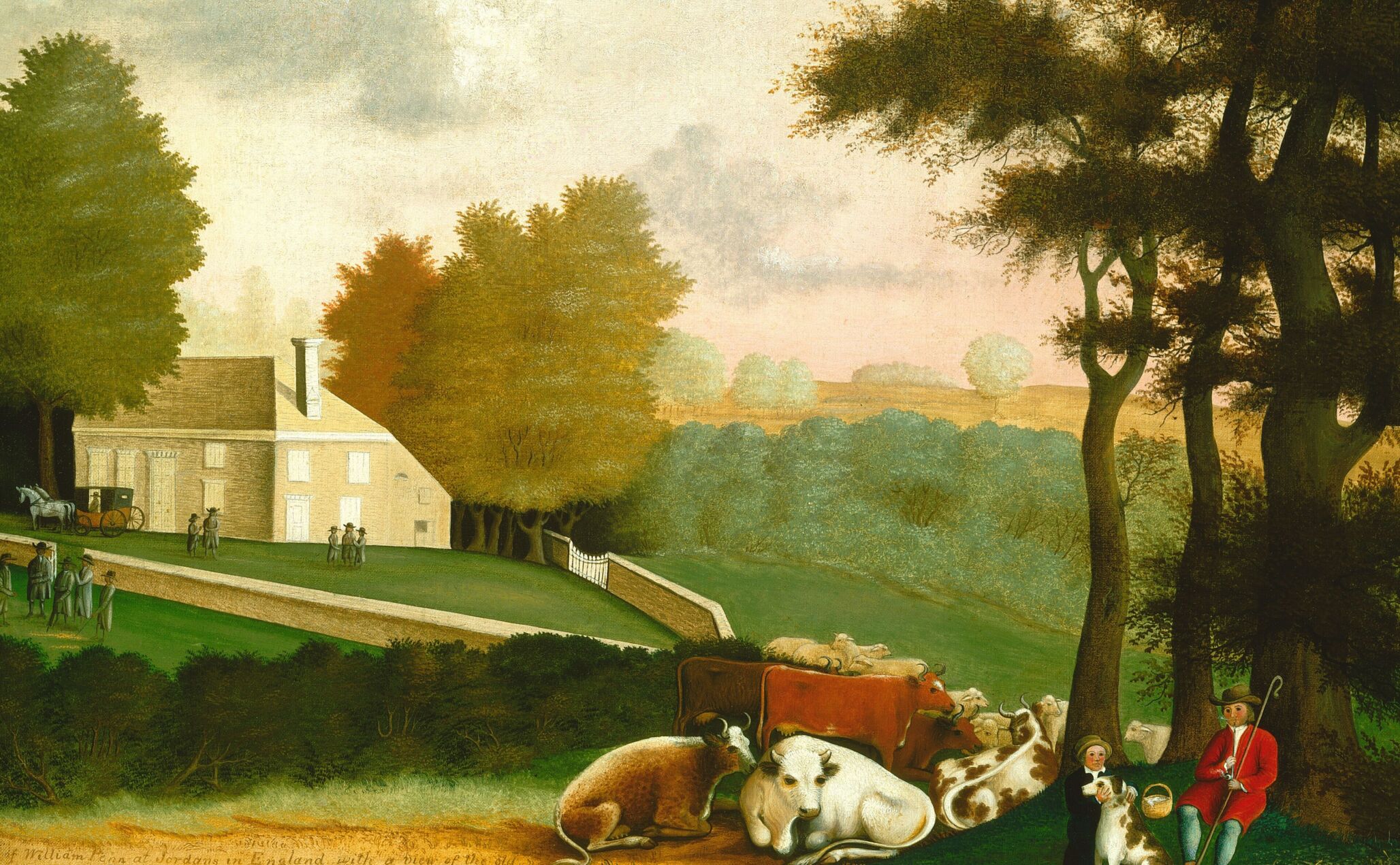
In the 1760s, the idea of a distinct American identity was new for the colonists. “American” was a geographical description, not a national one.
Although Dickinson emphasized Americans’ positive qualities, he was not naïve or flattering. He also cautioned them about their weaknesses and challenged them to overcome their vices. “Let us equally shun the benumbing stillness of overweening sloth,” he admonished, “and the feverish activity of that ill informed zeal, which busies itself in maintaining little, mean and narrow opinions.” Rather, he offered a new and radical ideal to which they should aspire: equality. “Let us with a truly wise generosity and charity,” he encouraged, “banish and discourage all illiberal distinctions, which may arise from differences in situation, forms of government, or modes of religion.” And he provided the first definition of an American: “Let us,” he proclaimed, “consider ourselves as MEN—FREEMEN—CHRISTIAN FREEMEN—separated from the rest of the world, and firmly bound together by the same rights, interests and dangers.”
This clear pronouncement of what it meant to be American resonated with the colonists so profoundly that they elevated Dickinson to celebrity status, showering him with praise and tokens of gratitude.
To secure American rights, Dickinson advocated peaceful resistance and gradual independence from Britain—but only after they had created their own robust constitution. On July 1, 1776, for the good of his country, he spoke his conscience against independence, distaining all the popularity he had accrued over the past decade leading the resistance. Of course, Congress decided against him. Dickinson then modeled the purest form of patriotism: he withdrew his objection and threw his entire support behind the cause of independence, leading his Pennsylvania militia battalion to New Jersey to meet the British.
For many more years, Dickinson continued to serve in office and counsel Americans about their national identity and public behavior. During the debates to ratify the 1787 Constitution, he wrote another series of letters signed “Fabius.” Addressing “unpolished but honest-hearted” Americans, he again admonished them to aspire to their best selves. Two main concerns were imprudent choice of leaders and the accumulation of wealth. “Will a virtuous and sensible people chuse villains or fools for their officers?” he asked. He reminded them to maintain “a reasonable, not a distracted will” and to remain “cool” when considering national affairs. Because, he warned, “When frensy seizes the mass, it would be madness to think of their happiness, that is, of their freedom.” Should that happen, “[t]hey will infallibly have a Philip or a Cæsar”—two ancient tyrants—“to bleed them into soberness of mind.”
Similarly, seeing the great potential for individual and national wealth, Dickinson addressed the dangers it created. “May simplicity be the characteristic feature of [Americans’] manners,” he proclaimed, warning them to avoid both “luxury” and “the thirst of empire.” “May our national character be—an animated moderation, that seeks only its own, and will not be satisfied with less.” Because “[t]he abuse of prosperity, is rebellion against Heaven,” he offered the rule he himself lived by: “we never consult our own happiness more effectually, than when we most endeavour to correspond with the Divine designs, by communicating happiness, as much as we can, to our fellow-creatures.” Dickinson ended by wishing for Americans his eternal desire: “a perpetuity of freedom, virtue, piety, and felicity, to them and their posterity.” His values should speak to us still.

About the Author
DR. JANE E. CALVERT is Founding Director and Chief Editor of the John Dickinson Writings Project.