What Does it Mean to Be An American?
Filmmaker Ken Burns reflects on the wisdom he gained while documenting America’s story.
October 15, 2026
For the year and a half before PBS broadcast The American Revolution in November 2025, and then throughout the 250th anniversary year itself, I traveled the country talking with Americans of every background about our founding story. The questions varied. People wanted to know what happened in their own towns, which founder mattered most, what the founders might think of us today, and what surprised us most while making the film.
But eventually every conversation found its way to something larger, even if it was harder to articulate. What does it mean to be an American? More fundamentally, how did this idea of us come to be?
The answer begins with a remarkable act of imagination.
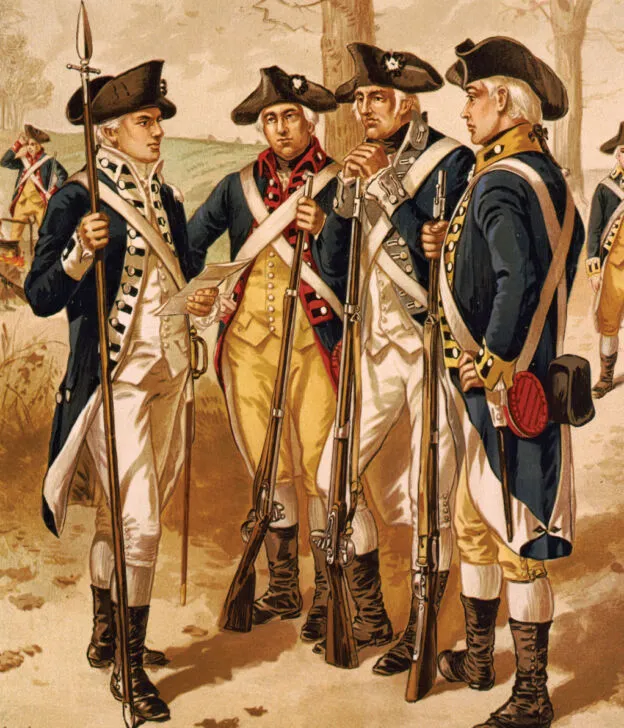
When George Washington accepted command of the Continental Army in the summer of 1775, there was no United States. There were thirteen colonies with different economies, different religions, different histories, and often competing interests. Most people identified with the town or colony where they lived, not with a nation that did not yet exist. Yet the Continental Congress charged Washington with the mission of creating an army that would fight not for a king or a parliament across an ocean, but for the proposition that a people could actually govern themselves.
It is difficult to appreciate how radical that idea was. Throughout most of human history, soldiers pledged their allegiance to a monarch, an emperor, a tribe, or a dynasty. The Continental Army represented something different. It asked thousands of ordinary men, many of whom had never traveled beyond their own hometowns, to imagine they were part of something bigger than themselves.
Washington’s greatest achievement was not just winning a war. It was persuading thirteen fiercely independent colonies that they shared a common destiny. And when the war ended, he reminded the governors of those now still disparate states that the future depended upon Americans thinking of themselves as a united people.
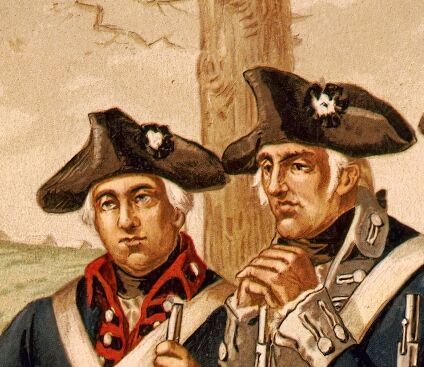
Washington’s greatest achievement was persuading thirteen fiercely independent colonies that they shared a common destiny.
The work of creating us, however, did not end at Yorktown.
Less than a century later, Americans turned their guns upon one another in a conflict that tested whether the nation born with the idea that all men were created equal could survive its own contradictions. Standing on the battlefield a few months after the largest battle fought in North America, at Gettysburg Abraham Lincoln asked the living to dedicate themselves to “a new birth of freedom,” recognizing that every generation must renew the promises first made in Philadelphia and defended at Valley Forge. Two and a half years earlier, in his First Inaugural Address, he had appealed to “the mystic chords of memory,” stretching “from every battlefield and patriot grave to every living heart and hearthstone all over this broad land.” He understood that what must bind us together is not ancestry, but memory, sacrifice, and a commitment to a common purpose.
That understanding has carried Americans through defining struggles at home and abroad, from world wars to the Civil Rights Movement. Franklin Roosevelt did not describe democracy simply as a form of government; in the midst of global war, he defined it through enduring ideals: freedom of speech, freedom of worship, and freedom from fear. Dwight Eisenhower, who knew better than most the terrible costs of war, reminded us in his farewell address that only “an alert and knowledgeable citizenry” could preserve liberty and security. Rev. Dr. Martin Luther King Jr. understood that the American story was never about abandoning our founding ideals but finally honoring them. His dream was of an America more faithful to its oldest promises, expanding the circle of us until it truly included everyone.
Across two and a half centuries, the language changed and the challenges differed. Yet the question remains remarkably consistent. Can a nation founded not on ethnicity or even claims to antiquity, but on ideas, continue to persuade each new generation that those ideas are worth preserving?
As I traveled across the country to discuss our film, people would ask about our divisions, and whether a country as divided as ours can survive. The divisions that seem to define our public life today are real. But they have always been real. The United States has never been held together by unanimity. It has endured because generation after generation has answered a larger call, choosing again and again to expand the meaning of that simple, indispensable word: us.
Every generation has been asked to decide whether this nation would become a little more inclusive, a little more just, a little more faithful to the ideals that first inspired its creation. That work now belongs to us.
Perhaps that is what it means to be an American. Not that we inherited a perfect country, but that we inherited a pursuit, a possibility, a promise. That promise requires every generation to enlarge the meaning of liberty, deepen the practice of democracy, and widen the embrace of that smallest, but most powerful word in our language: us.

About the Author
KEN BURNS is a filmmaker. His most recent work, The American Revolution, premiered in 2025.