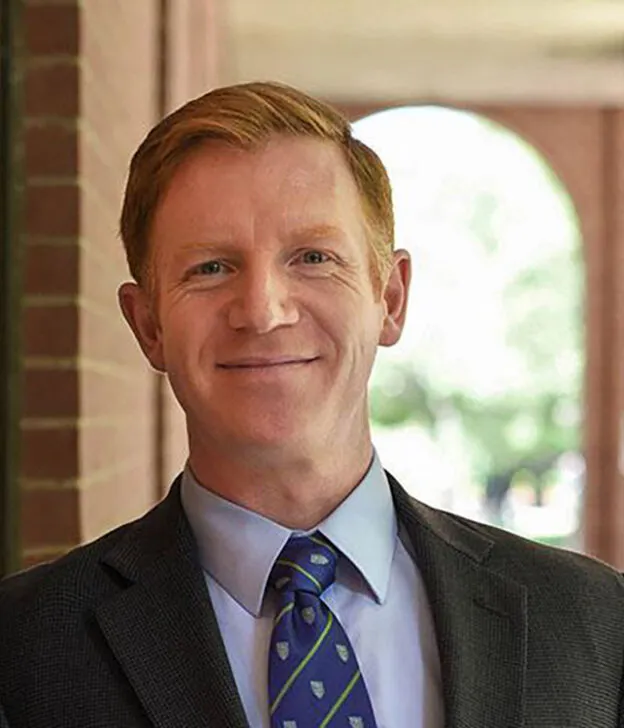
An interview with Peter Campbell
JMC Resident Historian Elliott Drago sat down with America250 Media Fellow Peter Campbell to discuss the meaning of the republican experiment, the importance of reading, and the value of a robust and inspiring civic life.
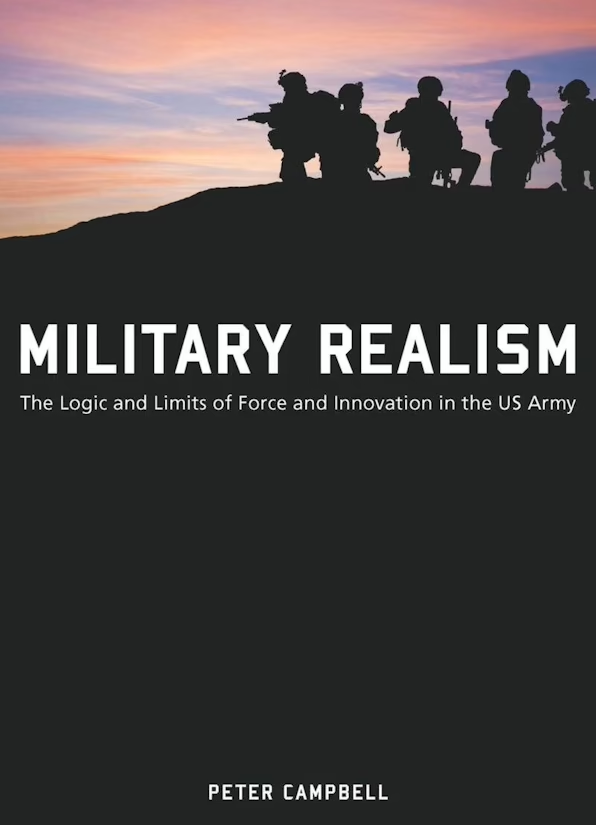
Dr. Campbell is associate professor of political science at Baylor University. He earned his Ph.D. in political science from the University of Notre Dame and is an international relations expert whose research focuses on international security, civil-military relations, strategy, insurgency and counterinsurgency, and cyberwarfare, among other issues.
September 3, 2026
ED: What inspired you to become a scholar?
PC: Two experiences stand out when I think of how I became a scholar of politics and war. The first was my original encounter with military and political history through Ken Burns’ documentary, The Civil War. I recall many afternoons spent absorbed in episodes. Burns’ telling of the Civil War brought together the whole panoply of that historical episode: the horror and valor of war, the moral reckoning over slavery, the fracturing of close personal and familial relationships over the war, the role of technological innovation in war, and the experience of both supreme commanders and private soldiers on both sides. As a result, I became fascinated by the relationship between war and politics, and with civil-military relations, the core of my scholarship today.
Around the same time, I became interested in poetry, especially the romantic poet John Keats. At one point I found myself pouring over Keats’s epic poem Hyperion, flanked by a glossary of Greek and Roman mythology, looking up each member of the ancient pantheons as they appeared in the poem. What can I say, I was a bit of a strange young man. Engrossed in this way, I had a very palpable sense that I was happy in the act of research. I often tell my students today about this experience with Keats and advise them to be on the lookout for similar experiences that point the way to their own path in life.
ED: As we celebrate the nation’s 250th anniversary, what lessons from your scholarship might help citizens reflect on the meaning of the American experiment?
PC: Standing 250 years from the Founding, there is a tendency to see the success of the American experiment as inevitable. This is far from true. It was a very close-run thing, as the British would say. While the preservation of the American Constitution was in part due to the institutional arrangements set up by the Constitution, it was also due to individuals of incredibly strong conviction and character. In my own discipline of international relations, there is a tendency to denigrate the importance of the individual and focus instead of impersonal forces, like regime types, economic systems, and the structure of the international system.
Washington’s principles
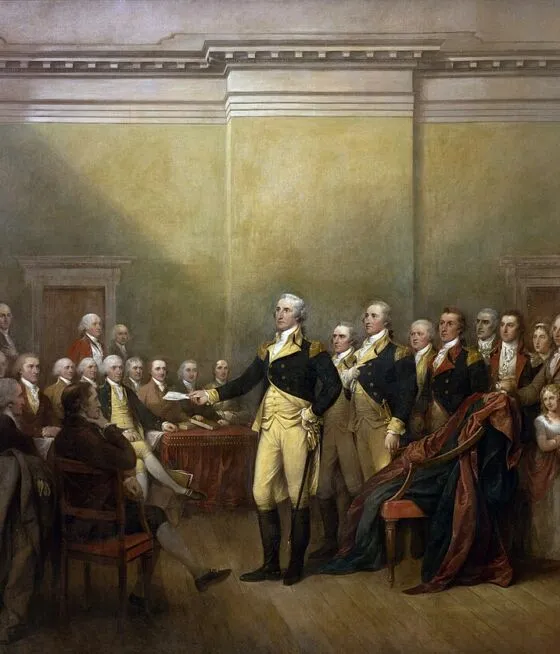
PC: In the case of the United States, however, we can say with certainty that the decisions of a single individual, George Washington, were essential to its preservation. Had Washington not resigned his military commission at the end of the Revolutionary War and dissuaded his rebellious officer corps from marching on the Continental Congress, the United States would have gone the way of the Roman Republic, the freedoms of its people crushed by the very instrument meant to secure those freedoms. Washington’s decision to adhere to the principle of military subordination to civilian political authority became the founding moment in American civil-military relations. It is clear from my studies of those relations that the stability of the American civil-military arrangement is the envy of many other countries. The history of the United States is a testament to the impact of the character and convictions of free individuals on the course of their political community.
ED: How can Americans become better stewards of civic life and culture, and what important civic practices have we lost sight of that should be recovered?
PC: I think among the most important civic practices we have lost are reading and writing. I find that very few of my students read for pleasure. Most sit around waiting to be assigned reading, and then only do it under duress, if at all. Yet some of the most impressive and civically minded people in history were not formally educated. Both Lincoln and Churchill were autodidacts, meaning they were largely self-educated, seeking out especially the great books. Many students today would rather peruse an AI summary of a reading and hope they can muddle their way through a class discussion or an exam. In addition, students often look at writing assignments as too onerous and a waste of time. No wonder they offload their writing assignments to AI.
The problem here is more than one of intellectual honesty and academic integrity, however. We write to find out what we think, how to think, how to organize our ideas, and how to confront ideas that challenge our opinions. In the American tradition, there might be no better example of a sustained argument of this kind than the Federalist Papers. Students often consider these challenging reads, but they reward those who take the time to read and reread them.
Through a close reading of the Federalist Papers, we can get a glimpse into the minds of the founding generation and understand the reasons for the structure of the American republic and some of the alternatives on offer at the time. Good citizens should be good readers and writers.
ED: What gives you the greatest hope or inspiration about America’s civic life today?
PC: As is hopefully obvious from my discussion about reading and writing, young students today face many challenges. They are bombarded with a thousand forms of media that demand, but don’t deserve, their constant attention. We adults, professors included, are not immune to these distractions. I often find myself mindlessly “doomscrolling” on my phone, forgetting completely why I picked up the device in the first place. Yet consistently, inside and outside the classroom, this generation of young Americans surprises and impresses me. Students regularly ask questions that cause me to reassess my understanding of politics and international relations. The undergraduate theses I supervise regularly teach me new things, from the origins of the Singaporean regime to the impact of AI chatbots on moral reasoning, to the lessons for life and politics hidden away in classic novels like the Lord of the Rings and Fahrenheit 451.
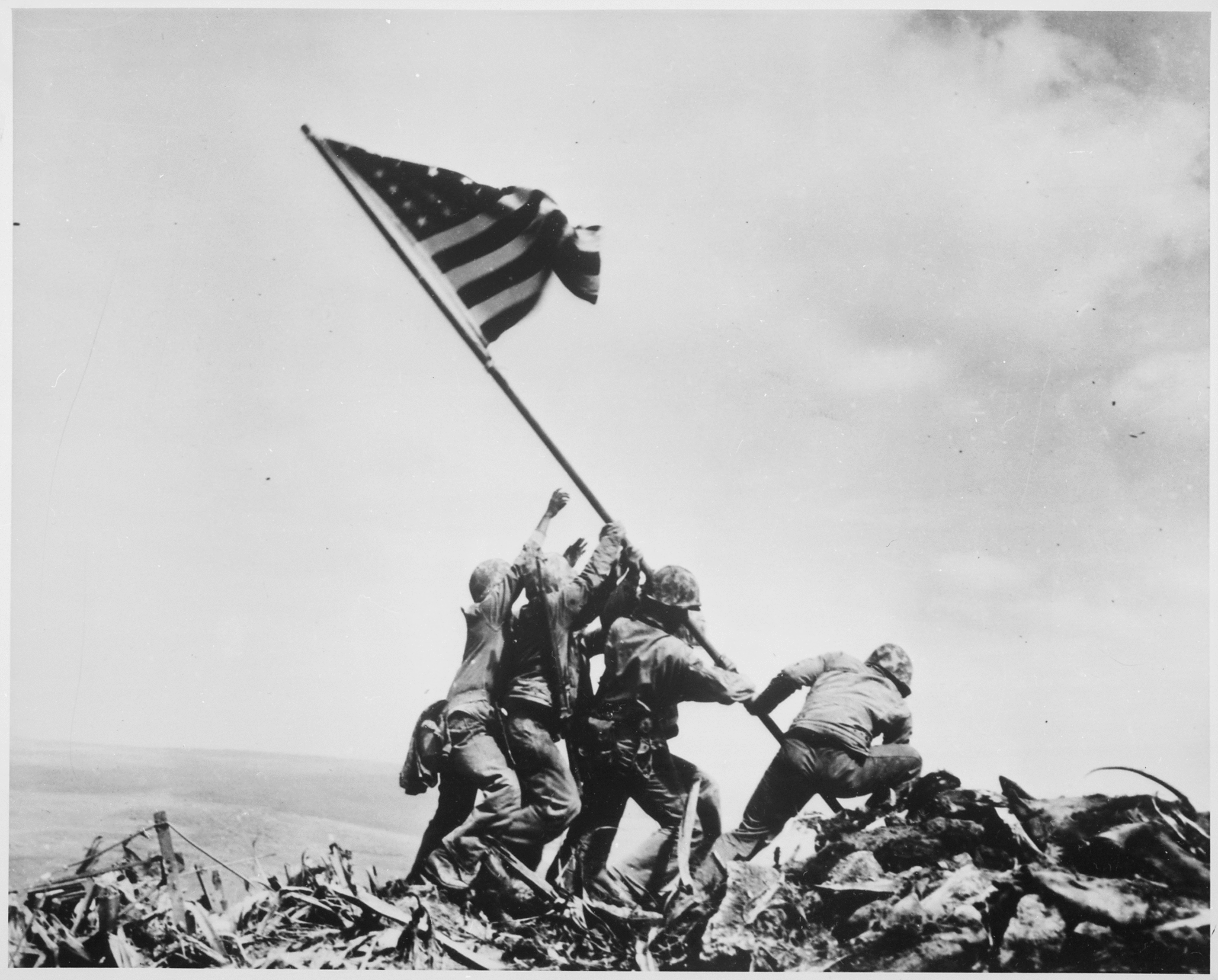
One important lesson I’ve learned from reading history is that the older generation tends to doubt the ability of the younger generation to meet the demands of the future. In the lead up to WWI and WWII, the older generation thought the young were too mentally and physically soft to face the challenges ahead. In both cases, however, young people rose to the occasion and strove and suffered greatly to defend their free political communities. Learning from my students keeps me humble and inspires hope for the future of America.
Picking Washington’s brain
ED: If you could travel to one moment in American history and speak with one American historical figure from that era, where would you go, who would you want to meet, and what would you ask them?
PC: It might seem like a cliché, but I would travel back to the 1790s and sit down with George Washington in the cabinet meetings that led to the Neutrality Proclamation and the Jay Treaty with Great Britain.
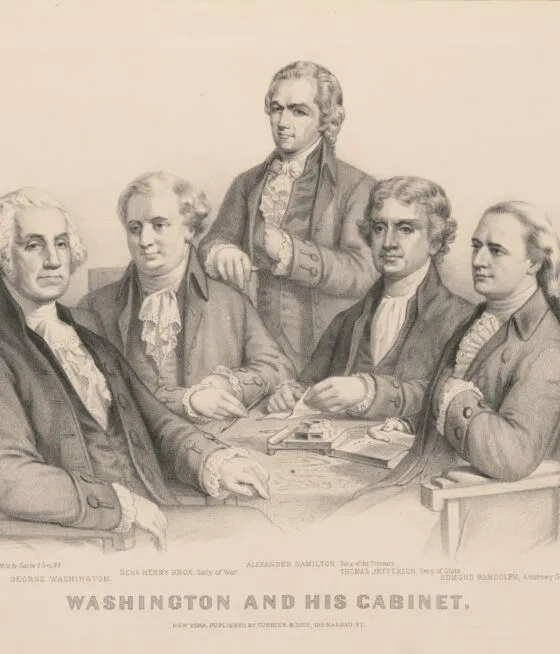
In those meetings, Washington observed Jefferson, Hamilton, Knox, and Randolph debate the American response to the French Revolution, its bloody progress, and the world war that it sparked. After the meeting, I would love to have sat at Washington’s elbow as he weighed the merits of the competing courses of action, hopefully having an opportunity to ask him questions and pick his brain.
Both of these foreign policy decisions met with intense criticism, especially from partisans of the French revolutionary cause like Jefferson and Madison. Through an intermediary, Philip Freneau, Jefferson and Madison criticized Washington’s policies relentlessly, including an unhealthy dose of personal attacks on the honor and honestly of the hero of the American Revolution.
If we think politics in America are ugly now, we should take a look at the kind of invective that was being spewed at Washington by other members of the founding generation; even members of his own cabinet.
Washington, however, did not bow to the elite or public pressure, and decided on a policy that steered a small and weak American ship of state between two warring European great powers. To be present at this key decision point would be a dream come true.
ED: What do you think is the most misunderstood aspect of American history, and how would you help us better understand it?
PC: In the past ten years or so, there has been a real ramping up of rhetoric about threats to American democracy. Democracy, we are told perpetually, is on the ballot. An even cursory search for the term democracy in the writings of the founding generation, however, would show that they were skeptical of democracy. Showing their debt to the ancient and modern political philosophers, many of the founders mistrusted extreme forms of popular rule. They were always concerned about the threat the tyranny of the majority posed to individual liberty. There needed to be checks on the will of popular legislatures, provided by an energetic executive and the rule of law.
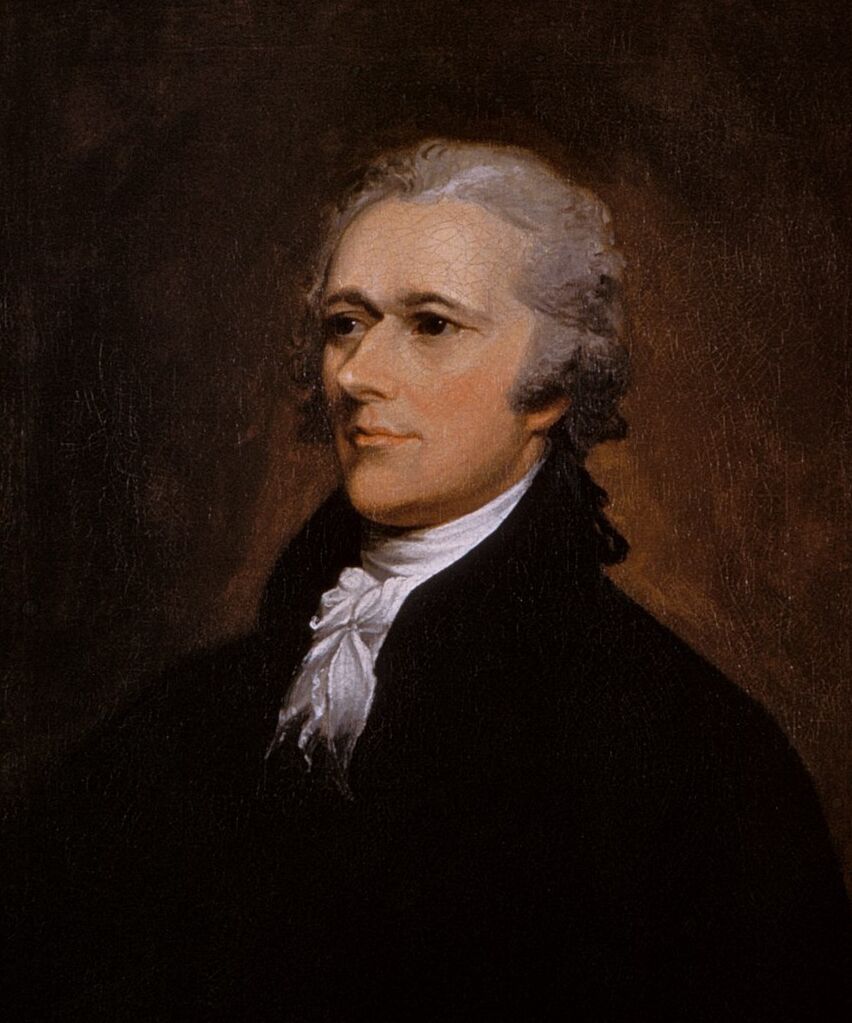
Today, we are also often told that democracy is the only legitimate form of government. And American foreign policy has sought to expand the number of democratic regimes around the world, sometimes by force of arms. We should recall, though, that this democratic expansionism was the policy of the revolutionary French regime that President Washington and his cabinet confronted in the 1790s. Revolutionary France declared its intention to impose popular government at the point of the sword across Europe. While some founders, like Jefferson, saw this as a fulfillment of their fondest hopes, others were very skeptical. When it came to the regimes of other countries, founders like Hamilton and Washington recognized multiple sources of political legitimacy and appreciated the virtues and vices of democratic rule.
Not surprisingly, Hamilton put it best. In a letter to Washington about the legitimacy of the wars launched by France, Hamilton wrote: “The pretext of propagating liberty can make no difference. Every Nation has a right to carve out its own happiness in its own way, and it is the height of presumption in another, to attempt to fashion its political creed.” (Hamilton to Washington, 2 May 1793). While the founders were in favor of government for the people by the people, they also recognized the dangers to individual liberty that could accompany an unreflective adulation for democratic government.
ED: What is one thing you wish every student knew about the American political tradition?
Every student should come to appreciate that America is the greatest experiment in political science ever.
Perhaps the central feature of the American Constitution is the way in which it built an institutional framework where the centers of political power check one another. That framework was developed from thousands of years of thinking about politics, beginning with the Greeks. The Founders always recognized their indebtedness to that great intellectual tradition. That tradition is in danger of being forgotten today or is under direct attack. Central to the thinkers in that tradition, and many in the founding generation, was the idea that in politics perfection is impossible. The Constitution is a study in compromise. It was far from perfect. Most obviously, it left unaddressed the question of slavery. Had the Constitution sought to end slavery, however it is almost certain that the Convention would have broken up without producing a draft that resolved many of the weaknesses of the Articles of Confederation.
Many of the founders would have agreed with Bismarck’s formulation that “politics is the art of the possible” not the perfect. Young people today should embrace this perspective because the alternative, seeking perfection in politics, is extremely dangerous. I would argue that in the 20th century seeking perfection in politics, embodied in national socialism and communism, killed and impoverished more people than both world wars. I think that America’s founding generation can provide its citizens, and the citizens of other countries, with a prudential perspective on politics that will see the republic last for another 250 years.
ED: Thank you for your time!
Dr. Elliott Drago serves as the JMC’s Resident Manager of Network Engagement & Resident Historian. He is a historian of American history and the author of Street Diplomacy: The Politics of Slavery and Freedom in Philadelphia, 1820-1850 (Johns-Hopkins University Press, 2022).