

An interview with Jacob Bruggeman
JMC Resident Historian Elliott Drago sat down with JMC network member Jacob Bruggeman to discuss his work on the intertwined histories of technology and politics in the modern United States. Dr. Bruggeman earned his Ph.D. in American history from Johns Hopkins University and is an expert in the history of hacking, technology, political economy, and liberalism.
August 4, 2026
ED: What inspired you to become a scholar?

JB: Growing up in a northeast Ohio town lingering between Cleveland and Akron, I sometimes felt suspended between landscapes that seemed historically uninteresting—strip malls and crabgrass frontiers to the north, paint-peeling barns and open country to the south. History, it seemed, rarely happened here. I spent free time reading chronicles of far-off places and long-dead people; school curricula emphasizing founders, foreign wars, and grand political dramas only reinforced this perception. What changed my understanding was, ironically, the desktop and handheld computers that brought the knowledge of the web to my fingertips. I discovered that the history of the Midwest was wider, deeper, and far more significant than any teacher or textbook had let on—and that the technology I was using to access that history was not separate from the region’s story but intimately intertwined with it. That realization—that the historical forces producing digital technologies did not simply act upon communities like mine but worked in and through them—became the animating question of my career.
At Miami University, I fell in love with history and began writing for public audiences, founding a student journal, and publishing in outlets from the Wall Street Journal to USA Today. During a stint covering cybersecurity at USA Today, I had an inkling that I might want to study the history of computing. At Cambridge and then Johns Hopkins, I found the training to pursue a question that had gripped me since I first started consuming history as a teenager: how have Americans used, governed, and been shaped by the technological systems structuring their lives? Attempting to offer some answers to that question seemed like an effort of some civic urgency.
ED: What is your area of specialty, and what first sparked your interest in that topic?
JB: I am a historian of technology and politics in modern America. My dissertation, “Hackers and the Remaking of American Political Order,” is the first historical study of hacking in the United States. It traces how communities of phone phreaks and computer hackers migrated from countercultural margins—antagonizing AT&T’s monopoly, building underground networks, and articulating radical critiques of state surveillance—to positions of influence within the very corporations, professional associations, and government agencies they once opposed.

My interest was reinforced early on in graduate school, when I noticed that the word “hack” had become ubiquitous term for technological solutions throughout society. Life hacks, growth hacking, Hacker News as the tech industry’s paper of record, and so on. The more I dug into this history, the more I found that hacker communities were not marginal curiosities but central actors in debates over privacy, encryption, professional ethics, and national security that shaped American governance from the Cold War through the War on Terror. What excited me was the opportunity to bridge fields that rarely speak to each other: intellectual and political historians tell the story of the American “political order” without attending to the technological systems that undergird it, while historians of technology often narrate technical change without connecting it to broader currents in political thought and statecraft. My work sits at that intersection, showing how the telephones, computers, and cables that constituted the country’s nervous system were inseparable from its political life.
ED: What’s the most memorable first-hand account you’ve come across in your research?
JB: In the archives of the Abbie Hoffman Papers, I found Hoffman’s personal copy of a 1971 Esquire article about the “Blue Box,” a device phone phreaks used to manipulate the multifrequency tones that controlled AT&T’s long-distance network. Hoffman had underlined passages throughout and scribbled enthusiastic margin notes throughout the manuscript—but the most striking annotation was scrawled across the cover page: “WE MUST HAVE THIS DEVICE IN OUR REVOLUTIONARY ARSENAL.” That single document crystallized something I’d been trying to articulate about the political origins of hacking.
For Hoffman and the Youth International Party, phreaking wasn’t just a prank or a way to make free phone calls. It was a means of turning the infrastructure of America’s most powerful monopoly against itself. Hoffman and his collaborators went on to co-found the Youth International Party Line, a magazine that repackaged telephone manipulation as a tool for New Left activism, bridging technical know-how with critiques of monopoly capitalism, state surveillance, and American empire. Today, we tend to think of hacking as a tool of geopolitical intrigue or professionalized and corporate cybersecurity. But in the early 1970s, some of the most prominent tinkerers, thinkers, and activists in the country saw a small electronic device as a tool to democratize Ma Bell, perhaps the foremost technological infrastructure in the U.S. at the time. The moment when counterculture met infrastructure set off a chain reaction that I trace across the rest of the twentieth century.
Echoing founding questions
ED: How does your research shed light on America’s founding principles and history?
JB: At its core, my research is about how Americans have grappled with the governance of powerful new technologies. These questions were first asked in the founding-era questions and have echoed across 250 years of American history. When cypherpunks in the 1990s fought the Clinton administration’s Clipper Chip, a surveillance device, they made arguments about privacy, free expression, and the limits of government power that echoed the Fourth Amendment and the broader tradition of civil libertarianism rooted in the founding. My dissertation shows that debates over encryption, computer crime, and digital privacy were not narrowly technical; they were struggles over what the constitutional promises of liberty and security would mean in the newly networked society of modern America.
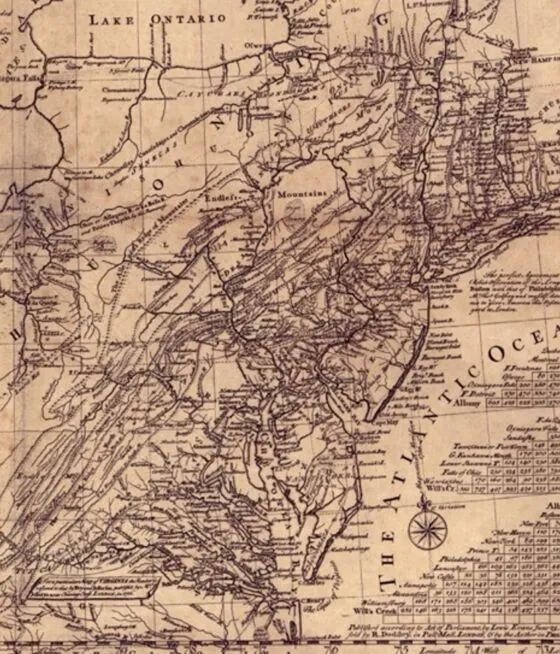
More broadly, my work illuminates how American political order has responded to disruptions in expertise and political economy—a pattern visible from the founding era’s debates over monopoly and republican governance through the twentieth century’s confrontations with industrial and then digital capitalism.
I also bring this perspective to my teaching and public writing, where I use historical case studies to help students and readers see that the dilemmas posed by artificial intelligence, platform monopolies, and cyber conflict are not unprecedented but rather the latest chapters in a long American story about governing technological power democratically. In my co-authored work on civics education, I have argued that universities must equip students to understand this history if they are to be informed participants in self-government.
ED: What is one thing you wish every student knew about the American political tradition?
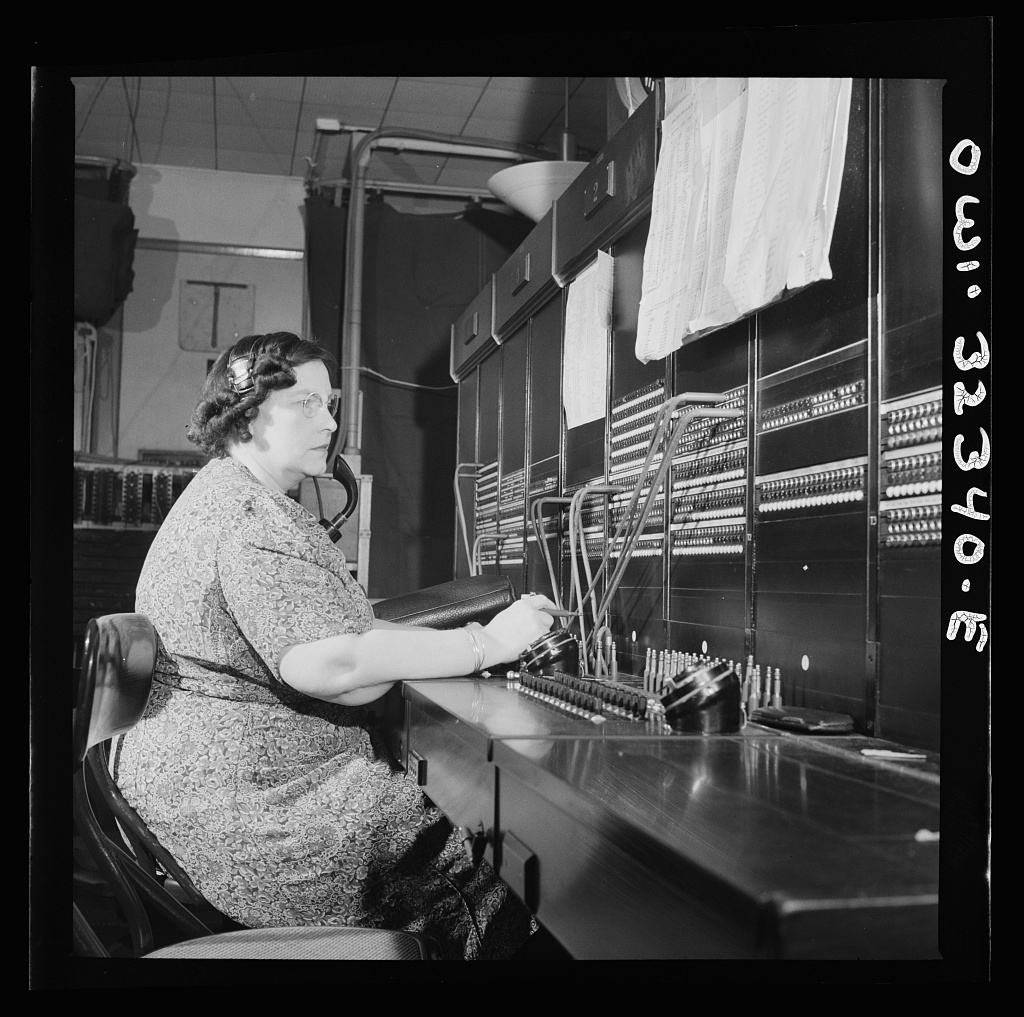
JB: I wish every student understood that the technologies structuring their daily lives—the phones in their pockets, the platforms shaping their information environments, the algorithms influencing what they see and whom they trust—are not outside politics but are artifacts shaped by the American political tradition.
From the founding era’s debates over the Post Office as democratic infrastructure, to the Progressive Era’s confrontation with railroad and telegraph monopolies, to the Cold War’s creation of the internet itself within the defense establishment, Americans have always governed technological systems through political argument, coalition-building, and appeals to founding principles. The tendency today is to treat technology as a force that simply happens to us—an attitude of technological determinism that breeds disengagement. But the history I study shows the opposite: at every critical juncture, citizens, activists, professionals, and policymakers made choices about how technologies would be used, who would control them, and what values they would serve. Phone phreaks in the 1970s challenged AT&T’s monopoly by invoking democratic access. Civil libertarians in the 1990s defeated government surveillance by mobilizing arguments about constitutional rights. These were acts of citizenship grounded in our political tradition. If we can show our students that this tradition is a resource for citizenship today, they might feel empowered to tackle the tough questions about how we ought to govern artificial intelligence, safeguard privacy, and guide our institutions through a profound period of technological change. This is the hard of work of democratic citizenship in a high-tech society.
A profound design
ED: As Americans prepare to celebrate the nation’s 250th anniversary, what lessons from your scholarship might help citizens reflect on the meaning of the American experiment?
JB: The leading lights of America’s founding and constitutional framework shared profound worries about the problem of faction in American life. Faction was a recurring theme in the founder’s individual writings and in important selections of the Federalist Papers. Across these readings, we encounter predictions that internal strife, if left to fester, would furnish our countrymen with any number of causes to fight with one another, and pushing the union ever closer to disunion. Thinkers like Madison, among others, however, understood their moment as one where the design of a political order could make a profound difference.
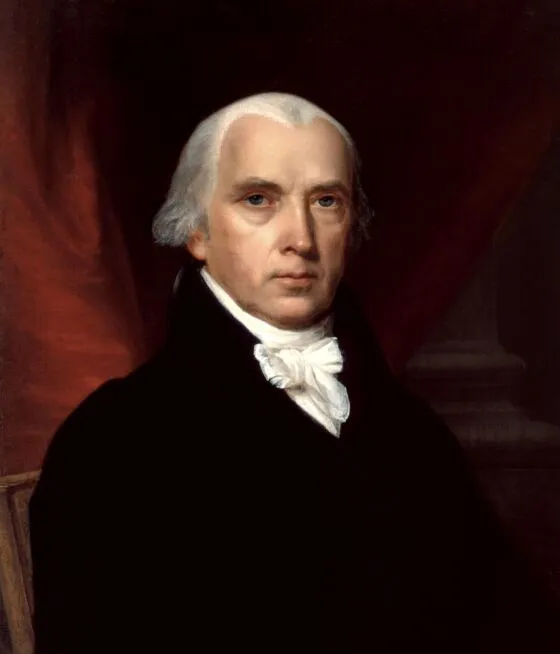
Differences between faction could be harnessed through the division of powers and other mechanisms to create a competitive and constructive political process, rather than endless infighting that would sow the seeds of disunion.
JB: These elements in the Constitution, in a way, can be thought of as a form of political technology—a set of systems, a political infrastructure, designed to channel human nature toward specific ends. Our framers were not perfect, of course. When slavery was coded into the system, betraying the great proclamations of equality in the Declaration, we can understand that political orders are rarely designed without a black mark of moral failure or political realpolitik in the process that produced them. And yet the purposeful design of systems that govern our political life is foundational in the American experiment. Its recurrence throughout our history, from the Constitutional Convention to the creation of the highway system, and across levels of political life, from local politics to federal agency procedure, should be seen as invitation for citizens to contribute to the design of political life whenever and wherever they interact with it. We need to do a lot more thinking about hot to connect this rich history of purposive design in our political order to the pressing question of how to govern the technologies shaping so much of our life today. I think we can approach the governance of such technologies with a similar zeal for promoting the flourishing of our citizenry and the bolstering of public goods. The spirit of 1776 need not live on only in D.C. or state capitols—it should be carried into the design of tools and infrastructures that will shape the next century of American life.
ED: Thank you for your time!
Dr. Elliott Drago serves as the JMC’s Resident Manager of Network Engagement & Resident Historian. He is a historian of American history and the author of Street Diplomacy: The Politics of Slavery and Freedom in Philadelphia, 1820-1850 (Johns-Hopkins University Press, 2022).