

An interview with JD Scott
JMC Resident Historian Elliott Drago sat down with JMC Network Member JD Scott to discuss the British Whig Party, its geopolitics, and Whig influence on the American political tradition. Dr. Scott is an independent scholar.
February 3, 2026
ED: When did you know that you wanted to become a historian?
JDS: My interest in history initially grew because I was homeschooled. My parents bought me young adult history novels, took me to historical sites, and encouraged me to take responsibility for my own historical education. But I would not say I knew I wanted to be a historian until my first year of graduate school. I had to read Paul Johnson’s A Shopkeeper’s Millenium for a Religious History class, and it frustrated me immensely. Johnson’s approach to explaining the explosion of belief in the Second Great Awakening as a function of changing economic and social relations between employers and employees seemed overly dismissive of individual agency. I spent hours digging into the footnotes of his book, searching for a way of picking his argument apart in class discussion. Along the way, I came to a better appreciation of Johnson’s approach and the historiography behind it. When I talked to my professor before class, she encouraged me to present my findings to my classmates. The pleasure I found in piecing together the historiography behind Johnson’s book became the launching point for a similar approach to all my class work. In retrospect, I credit that class as the moment I first became something more than a collector of historical facts—someone instead interested in grasping the deeper currents behind historical writing.
Whig basics
ED: Since the history of the British Whig Party may be unfamiliar to readers, could you provide some historical context to help set the stage?
JDS: There are two distinct eras of Whig partisanship. The first Whig party existed roughly from 1670 to 1763. They opposed the prerogatives of the English monarchy which enabled kings to rule without calling Parliament. Initially defeated by Charles II, the Whigs developed various political theories about monarchical legitimacy that justified their attempt to change the line of succession. John Locke’s Two Treatises of Government was one such theory—outlining a contract theory of government. In 1688, the Whigs defeated James II. The Bill of Rights (1689) enshrined the idea that no English monarch could rule without Parliament. But James II and his heirs had a stronger claim to the throne.
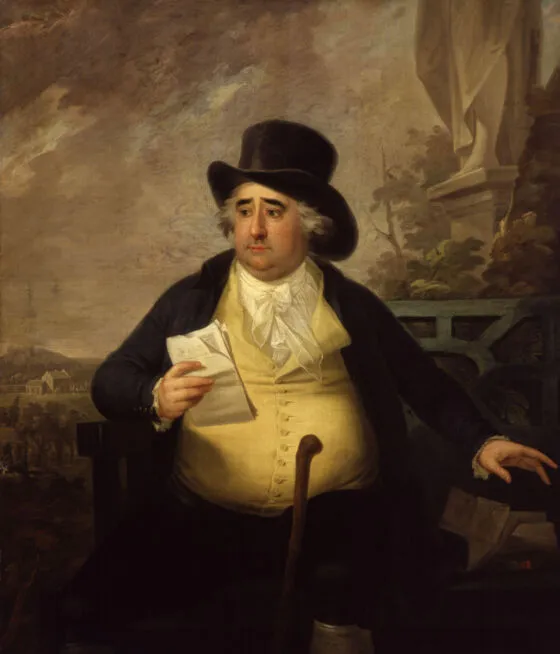
JDS: For the next seventy years, the Whigs defended the constitutional settlement of 1688 from the Jacobite supporters of the Stuart dynasty. Along the way, Whigs in Britain largely discarded John Locke’s contract theory, relying instead on the ideology of the ancient Anglo-Saxon constitution. In Britain, the monarch ruled in Parliament—his executive power safely balanced by the House of Commons and the House of Lords. This was the King-in-Parliament ideal, supposedly reflecting ancient Anglo-Saxon traditions.
The second Whig party was born after the accession of George III (1763) and came to full maturity during the war against America. These Whigs conflated the seventeenth-century prerogatives of the monarchy (long since legally dismantled) with the eighteenth-century privilege of the monarch to distribute patronage and political spoils in Parliament. This influence of the monarch and his ministers, the second Whig party argued, effectively enabled the executive government to ignore Parliament. The result was the same as in the 1670s: the inability of Parliament to protect civil and political liberty from the executive. In 1783, the Whigs saw an opportunity to correct the problem as they saw it. Holding a majority in Parliament, they attempted to force George III to accept a ministry of their choice. George refused, appointing a minority government led by William Pitt. The election of 1784 handed the Whigs a thumping electoral defeat and seemed to portend disaster. The power of the executive was growing, Whigs believed. Liberty, inevitably, would disappear.
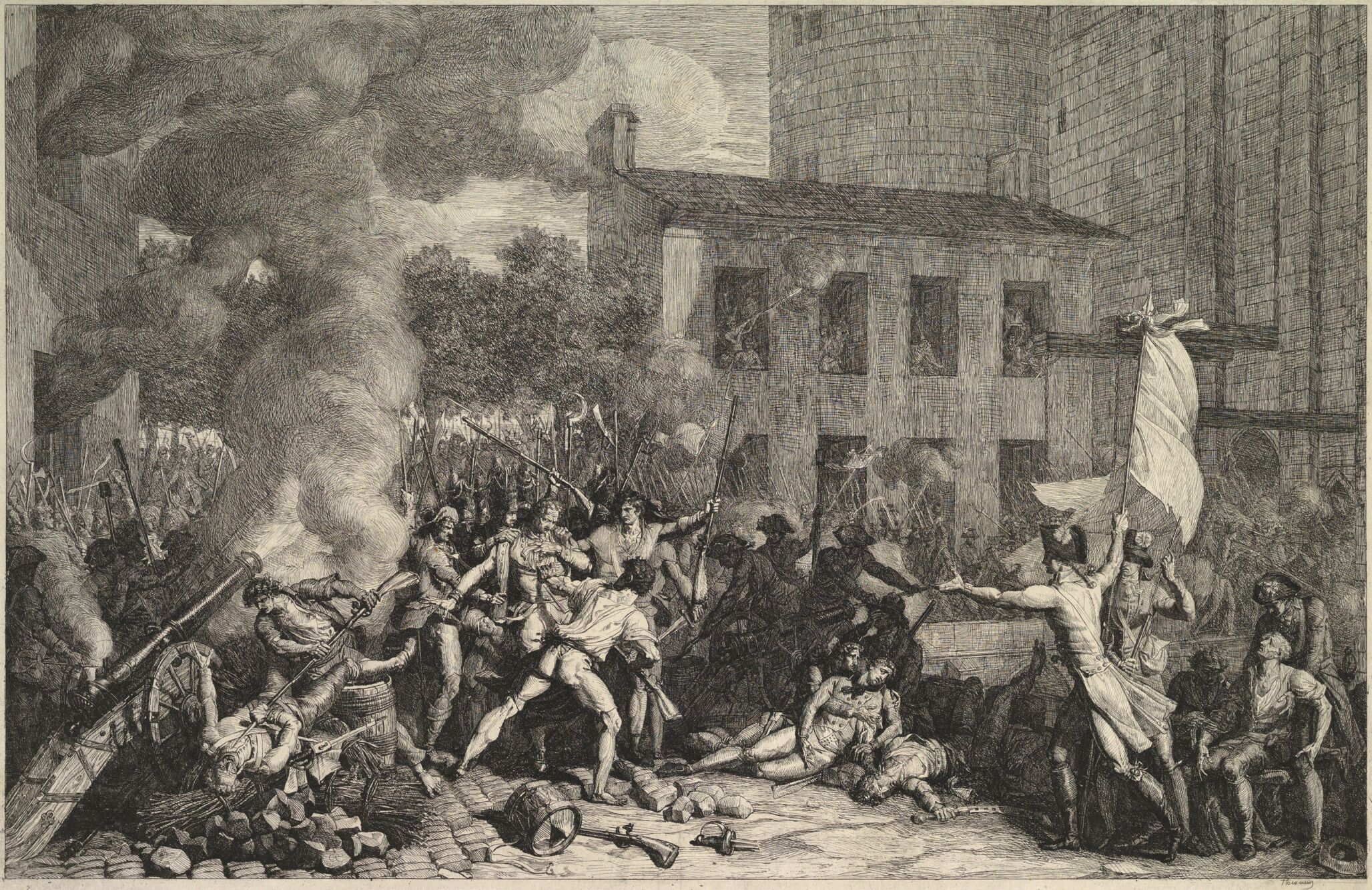
It was in this context that the French Revolution of 1789 gave the Whigs new leverage to sustain their politics. Disorder and chaos in France, the Whigs believed, arose from the long-unchecked growth of monarchical power in that kingdom. Revolution, they insisted, was a consequence of executive over-reach and suppression of liberty—a privileging of dynastic legitimacy based on divinely appointed kingship over and above the true source of legitimacy, the political approval of the “people.” Other continental events, not least the second and third partitions of Poland in 1793 and 1795, reinforced Whig fears about a revivified absolutism. Whigs began linking national self-determination abroad with popular self-determination at home in Britain.
ED: How did the Whigs define legitimacy, and how did their definition collide with William Pitt’s actions?
JDS: Following the end of the first party framework in the 1760s, all Britons of political importance believed the legitimacy of their government depended on an admixture of popular support. The second party framework evolved over differences on the ability of the executive to influence the House of Commons. Did influence effectively undermine the voice of the people and thereby promise to end British liberty? Or did influence help direct and channel popular support, preventing it from undermining order? William Pitt and his followers believed the latter. Charles Fox and his followers—the second Whig party—believed the former. The Whigs were in a minority because French revolutionary events seemed a warning about too much popular power in a political system.
But other continental events reinforced Whig convictions about the danger of untrammeled executive power. The second partition of Poland seemed to prove there was an international conspiracy against liberty and popular legitimacy. William Pitt’s actions towards Revolutionary France made it easy for the Whigs to associate him with continental absolutism. Pitt himself was not a supporter of continental style, divine right legitimacy. For him, the French invasion of Belgium (1793) was a threat to British national interests. It necessitated, as it always had, making alliances with foreign powers whose political systems were different than Britain’s. But for the Whigs his willingness to make these alliances became proof of perfidy against popular legitimacy.
The Foxite Whigs believed Pitt manufactured a war with France. He leveraged war fervor and patriotism in support of his secret goal of expanding executive authority at home. The war had never been necessary, they claimed; it was part of an assault on Parliament’s role in legitimately expressing popular self-determination—the right of the people to choose their own government.
ED: What challenges did the Whigs face when events in Europe didn’t align with their ideals of national liberty?
JDS: At the beginning of Britain’s decades long conflict with France, the Whig party was a small opposition faction still fiercely attached to a seventeenth-century conceptualization of national politics which did not fit late eighteenth-century society. Whig theories about how to best preserve liberty remained largely classical—liberty depended on the independent wealth of men of landed property.
Nations-in-arms
JDS: This began to change because of Whig experiences during the decades long war against France. The Spanish revolution of 1808 is an illustrative turning point. According to Whig theory, French armies marched from triumph to triumph in the 1790s and early 1800s because France was a “nation-in-arms.” To the Whigs, this meant the French government was based on popular legitimacy. The people naturally loved a government of their own choice, and their fervor made them unstoppable. But Spanish events tested this naïve theory. France invaded Spain in 1808. A nation-wide rebellion erupted in May of that year—initially forcing the French out. The Whigs celebrated early Spanish victories as a means of vindicating their domestic politics. But when France re-invaded and quickly crushed the Spanish, the Whigs found themselves in a quandary. Whigs had believed in the immutable power of a “risen” nation—it was a problem that Spain’s revolution resulted in military failure.
Whigs concluded Spain’s failure was not merely a consequence of monarchical absolutism; the root problem was deeper. Alienation between an ossified central government, an arrogant aristocracy, and a population seething with radical resentment doomed the Spanish. Instead of the traditional Whig theory about the dangers of untrammeled executive power, this new explanation focused on the alienation between social classes.
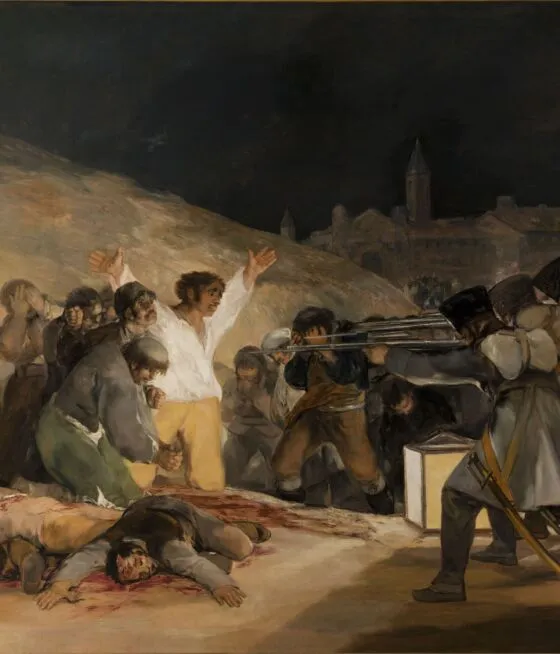
JDS: The maintenance of liberty hinged less on an aristocratic struggle against the monarchy, understood in seventeenth-century terms, and more on the maintenance of harmony between classes. An important step towards restoring harmony was a concomitant recognition that property and wealth were not the only qualifications for participating in national political life. The lower classes might be largely propertyless, but their fervor for national self-determination and political liberty was its own form of property—a property of merit. If properly channeled, this national spirit could sustain political liberty.
ED: How did the Whigs’ evolving interpretation of national self-determination help them maintain political unity over time?
JDS: Between the years between 1783 and 1830, the Whig party achieved political office for only a few months in 1806-1807. Maintaining party unity during these decades was problematic for a few reasons. For one, in an era before the practices of modern party discipline it was difficult for Whig party members to sustain their political careers. Without access to the power, the Whigs had no access to patronage and could offer little hope for advancement. But just as serious was the weakness of Whig political theory. Sustained political opposition had to be justified; it was not yet a normal part of British politics. Justifying political opposition during a war which was popular was hard. Increasingly, seventeenth-century anti-executive rhetoric no longer suited the purpose. As the threat of a French invasion increased and British military efforts faltered, Whig attacks against Pitt’s ministry looked self-serving and unpatriotic.
It was in this context that the cause of foreign liberty helped the Whigs sustain political opposition at home. By initially pointing to the partitions of Poland in the early 1790s, Whigs were able to broaden the context of their domestic struggle against Pitt into a more general international struggle against all arbitrary monarchs. Years later, when Spain revolted against France, the Whigs began reconceptualizing what the struggle for national self-determination meant.
By switching their focus away from the supposed threat of executive power and towards the growing alienation between all social classes, the Whigs found a stronger party principle which helped them sustain opposition in the changed circumstances of the early nineteenth-century.
Reckoning with Locke
ED: How did the British Whig party’s support for national self-determination compare to American revolutionary ideals of liberty and independence?
JDS: The American Revolution sourced its political theories from a specific branch of seventeenth-century Whig thought. Whigs in England came to downplay the more radical “commonwealth” tradition of republicanism and Lockean contract theory when they explained the 1688 constitutional settlement. Parliamentary-style, “king-in-parliament” rule put down deep roots in Britain during the 1700s. This was not the case in faraway America. When Britain set about asserting political rule in the colonies in the 1760s, American Whigs quickly adapted a strong critique of Parliamentary rule repurposed from John Locke and the more radical Whigs of the late seventeenth-century. In a way, the Americans were more Whiggish than the British—more concerned about government tyranny, more convinced that political rights were “inalienable.”
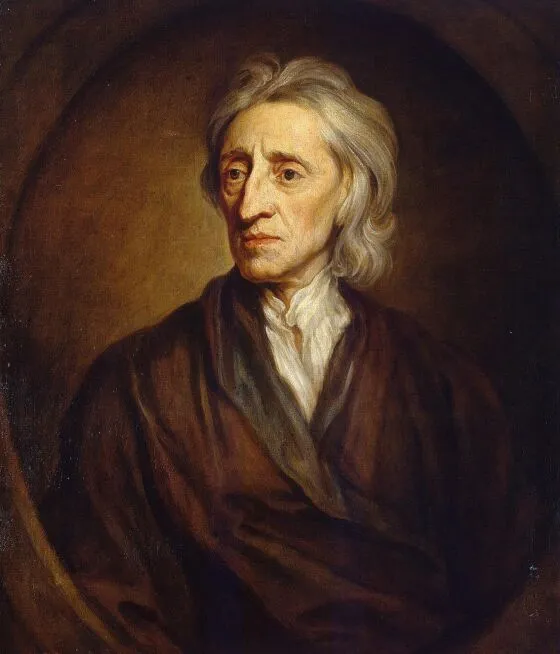
The Americans taught the British Whigs about the practical impossibility of holding a foreign people in political subjugation. The American assertion of independence provided British Whigs with a strong sense that opposing popular self-determination was futile.
This made it easier for the Whigs to oppose the war against Revolutionary France. A “people” having the right to determine their own institutions was all well and good in theory—in practice it was the American example which first gave the Whigs strong evidence to back up their politics. Sovereign independence became, in a way, one of the first “rights” British Whigs recognized as truly inalienable. On this foundation, the Whigs built their support of the French revolution and Polish independence.
ED: What are some Whig principles that better inform our understanding of America’s own founding principles?
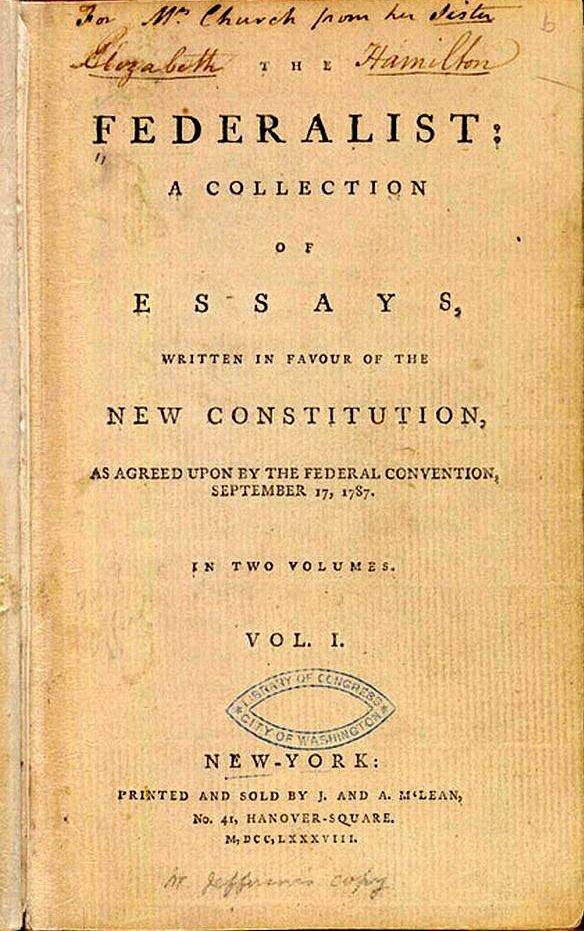
JDS: The American preoccupation with individual liberty had its roots in seventeenth-century Whig thought which obsessively feared the dangerous, corrupting power of central executive authority. The American revolution began because the founding fathers concluded that the original intent of the 1688 Revolution—to protect liberty from central authority—had failed. Their revolution was an attempt to creatively translate seventeenth-century Whiggism to the unique American environment.
Two examples stand out. James Madison, in Federalist no. 10, proposed a solution for the problem of political division which arose as a natural concomitant to republican liberty. Madison proposed political division, or faction, could be contained and controlled more easily in an expansive republic. The larger the republic, the less likely a dominant interest group would evolve and gain control of the central government. Similarly, Thomas Jefferson’s musings about the virtue of small, freehold yeoman farmers in his Notes on the State of Virginia had their basis in seventeenth-century Whig theories about how to best maintain liberty over and against a powerful state.
Unthreatened by powerful enemies, the early American republicans did not find it necessary to create a powerful, European style, fiscal military state. They were free, instead, to develop a uniquely confrontational theory of politics—the separation of powers—which diverged from the “king-in-parliament” theory of British Whiggism. They were free to maintain classical republican theory which counterbalanced the power of the government with the virtues of independent yeoman farmers. The Americans quickly developed their own political theories, but the Whig ethos retained potential—from “No King” protests directed at Andrew Jackson in the 1830s to the “No Kings” protests in 2025.
ED: Thank you for your time!
Dr. Elliott Drago serves as the JMC’s Resident Manager of Network Engagement & Resident Historian. He is a historian of American history and the author of Street Diplomacy: The Politics of Slavery and Freedom in Philadelphia, 1820-1850 (Johns-Hopkins University Press, 2022).