
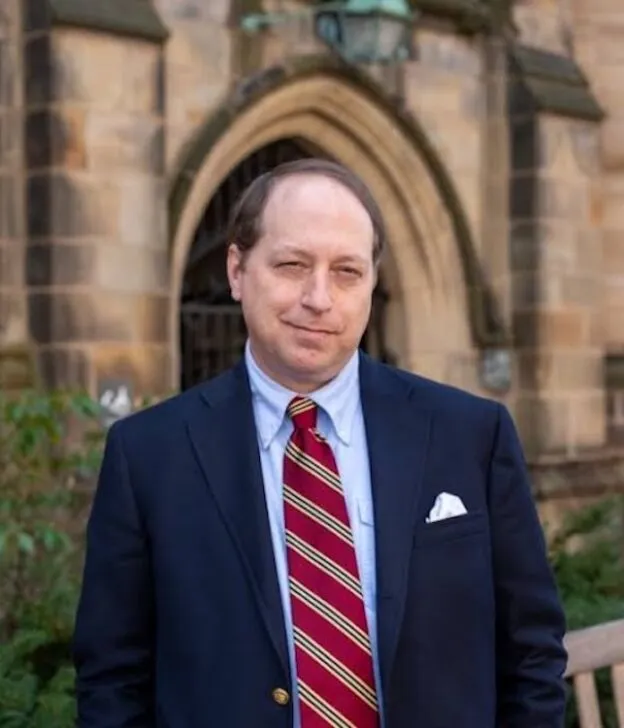
An interview with Michael D. Hattem
JMC Resident Historian Elliott Drago sat down with America250 Media Fellow Michael D. Hattem to discuss his work on the American political tradition, civic education, and the Declaration of Independence.
Dr. Hattem is Associate Director of the Yale-New Haven Teachers Institute. He received his PhD in History at Yale University, and his research interests and expertise include the American Revolution, Early America, and Historical memory.
September 28, 2026
ED: What inspired you to become a scholar?
MH: Even when I was young, I was always “scholarly” in the sense of being curious, reading widely, writing a lot, and asking big questions and trying to answer them. And one of my main curiosities and interests from early on was American history. In my twenties, I became increasingly fascinated with early American history and intellectual and political history, particularly after reading a small, old paperback biography of Thomas Jefferson by Saul Padover. From there, I began to read widely in the history of the Revolution, eventually making my way from popular histories to more academic histories. After that, my non-traditional academic journey began at community college, continued at The City College of New York, and ended with a PhD in History at Yale University. All that time, I have been driven by my curiosity about the past and its relationship to the present and to big questions about the nation and its origins.
ED: What is one thing you wish every student knew about the American political tradition?
MH: I wish every student knew that, as a term, the “American political tradition” does not refer to a set of static ideals or principles whose meanings were set in stone hundreds of years ago. Rather, the American political tradition is a process. It is a political and cultural process rooted in the ideas, experiences, debates, and compromises made by citizens, politicians, and thinkers alike.
The American political tradition is an adaptive yet cumulative process in which the past and the present collide as we constantly contest and challenge our ideas, ideals, beliefs, and customs and then attempt to learn from the experience.
ED: What makes the “American political tradition” American?
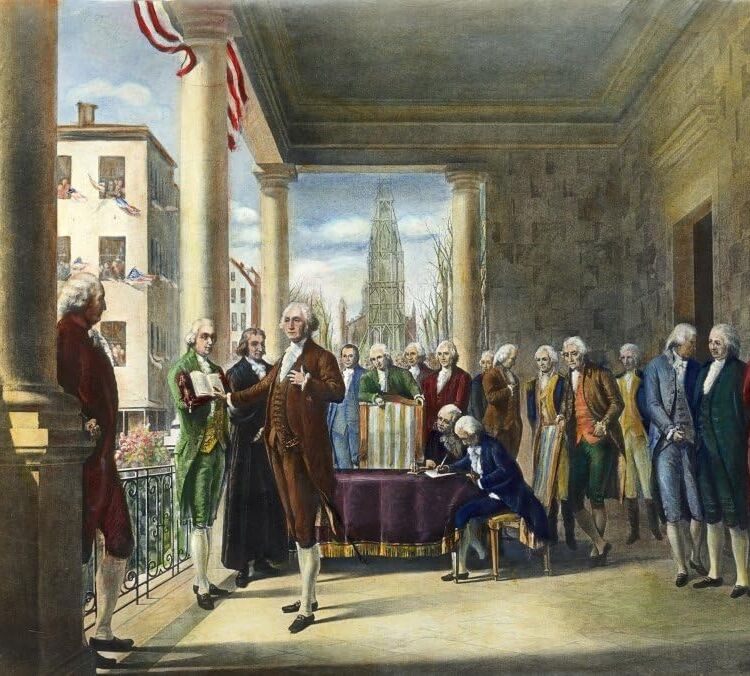
MH: The sources and contexts make our political tradition distinctly “American.” Americans have forged and developed it in the nation’s unique contexts and circumstances: from efforts in the eighteenth century to adapt European Enlightenment thought about government to a very different American context, to the development of the ideal of democracy in a nineteenth century marked my economic revolution and social change, to the reconsideration of the ideals of liberty and equality and the role of government in a republican system in a twentieth century shaped by internal and external upheaval. Beyond initial adaptations and the emergence of new ideals, we have continued to wrestle with the meaning and implication of the ideas at the heart of the tradition—liberty, equality, tyranny, resistance, democracy, republicanism, constitutionalism, etc…—all while the nation around us has changed rapidly.
Perhaps one of the defining features of the American political tradition is that it has been a useful and necessary tool for navigating the rapid change that has defined American history and for mediating our most divisive political and cultural conflicts.
Perhaps the reason it has been successful in doing so is that it is a sum of the past that we use to make sense of the present and express our vision of the future. As a result, it retains a level of vitality, resonance, and relevance to our lives as American citizens.
ED: As we celebrate the nation’s 250th anniversary, what lessons from your scholarship might help citizens reflect on the meaning of the American experiment?
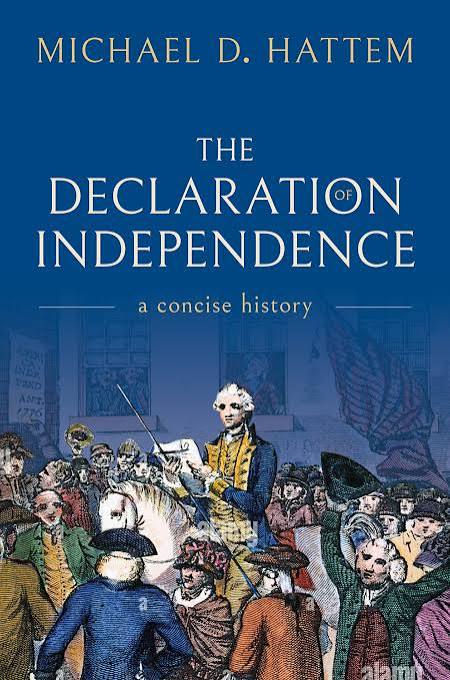
MH: All my work has focused on trying to understand how Americans have related to the past and its impact on the present. I hope that my work helps highlight the fact that the American political tradition is a process and that all Americans have a role to play in it. For example, it is important for Americans to understand that we do not think of the Declaration of Independence in the same way now that we did in 1776. Its significance and the meaning of its core ideals have changed over time as subsequent generations reinterpreted the document in new contexts to make it relevant and useful for them.
In fact, I argue in my forthcoming book, The Declaration of Independence: A Concise History, that it is that constant renewal of its relevance that turned the document from a Congressional press release into “American scripture.” And like scripture, the Declaration is not just a shared text containing our most important ideals, it is also open to interpretation by each and all of its readers. When we understand that, it should give contemporary readers the license to more deeply engage with and find the relevance of such a document for themselves. In doing so, they renew the relevance of the American political tradition more broadly.
ED: How do you define civic education, and what does it look like in the everyday lives of Americans?
The process I just described above is my basic definition of civic education and its role in our everyday lives. Of course, all citizens need “civics education,” i.e., a working knowledge of the structure and function of the government. But “civic education” is something broader. It is developing an interest in the past for the purpose of helping one understand the present. It is reckoning with the core ideals of the American political tradition.
But perhaps most metaphorically, civic education is about developing the feeling that as a citizen, you are part of the American political tradition and an understanding of the privilege and responsibility that comes with the civic role of citizen.
ED: Tell us about the first time you realized that you were an American.
MH: I do not think I can recall the “first time” I realized I was an American. As a child who read a lot and was deeply interested in history, I had that realization at too young an age to remember. Of course, that realization is just the first step. The next question is: “what does it mean to be an American?” Much of my life, both personally and professionally, has been devoted to trying to answer that question for myself and to understand how others have answered it. For myself, it involves civic belief in self-government, constitutionalism, and democracy, each of which are necessary to the long-term project of more fully realizing the Declaration’s ideals of liberty and equality. But that is also combined with knowledge of the nation’s history, the unique cultural forms it has produced, and how they reflect those civic beliefs.
The Memory of ’76
ED: What’s an example of the tenacity of American civic life?
MH: For me, the continuing importance and constantly contested nature of the memory of the Revolution is an example of the tenacity of American civic life. For 250 years, the founding has served as the foundation of our civic life and our political tradition. In my book, The Memory of ’76: The Revolution in American History, I argue that the foundational importance of the Revolution in our civic life comes in part from its role as our national origin story. Despite attempts by different groups to downplay or dismiss the importance of the Revolution throughout the nation’s history, it has remained fundamental to our civic life in how we think about our core ideals, political beliefs, and national identities, as well as how we think about the purpose and value of government and governance. And, as with the Declaration, by constantly reconsidering the meanings of the Revolution, we have constantly renewed its relevance, generation after generation.
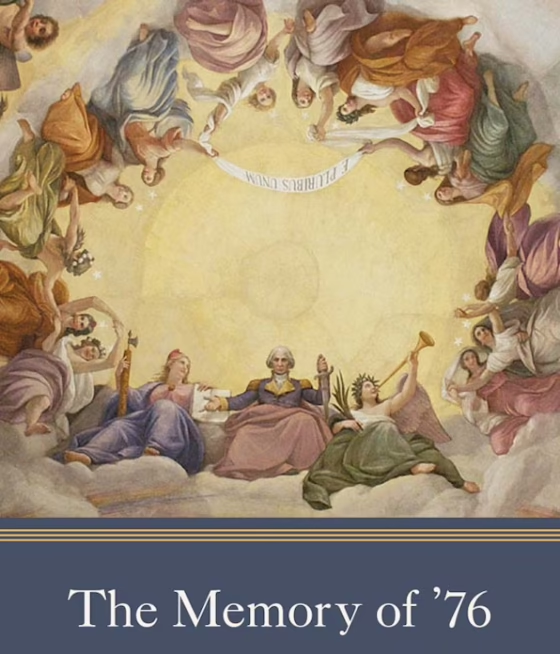
MH: Even through traumatic events both at home and abroad that shook our civic bonds and our political system to the core, the founding has remained central because it is the story we tell to explain not just how we got here but why we are here. For these reasons, the unwavering importance of the founding stands as a key example of the tenacity of American civic life.
ED: Thank you for your time!
Dr. Elliott Drago serves as the JMC’s Resident Manager of Network Engagement & Resident Historian. He is a historian of American history and the author of Street Diplomacy: The Politics of Slavery and Freedom in Philadelphia, 1820-1850 (Johns-Hopkins University Press, 2022).