An interview with Randall Fowler
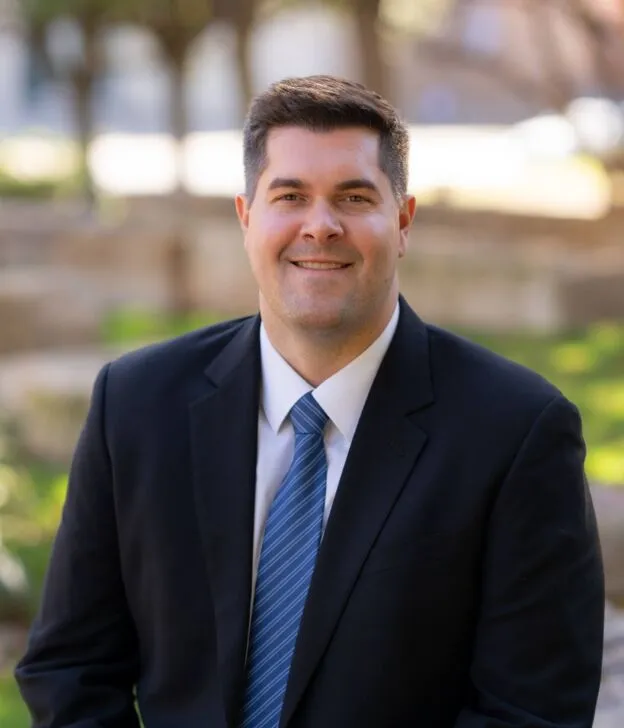
JMC Resident Historian Elliott Drago sat down with JMC network member Randall Fowler to discuss his work on presidential rhetoric and U.S. foreign policy in the Middle East. Dr. Fowler earned his Ph.D. in communication at the University of Maryland and is Director of Undergraduate Research at Abilene Christian University.
June 25, 2026
ED: What inspired you to become a scholar?
RF: Growing up in West Texas, the first time I traveled to a foreign country other than Mexico was the summer after my first year of college when I volunteered at a baseball camp in Israel. The diversity, creativity, and culture of the Middle East continued and continues to fascinate me. When I had the opportunity to serve as a Fulbright grantee to Jordan after graduation, it solidified my desire to better understand how Americans interpret this incredibly complex part of the world, which I primarily do through the study of U.S. foreign policy discourse and presidential rhetoric.
ED: What is your area of specialty, and what first sparked your interest in that topic?
RF: I am a presidential rhetoric scholar specializing in U.S. foreign policy in the Middle East. I distinctly remember riding in a taxi in Amman, Jordan, and listening to the news. Suddenly, amid local traffic updates and the weather, the broadcast shifted to a vote taking place in the U.S. House of Representatives. That moment crystallized for me just how important a role the United States plays in the world, and the incalculable impact American laws, policies, ideas, and decisions have around the globe.
Eisenhower in the Middle East
ED: What’s the most memorable first-hand account you’ve come across in your research?
RF: My first book More than a Doctrine: The Eisenhower Era in the Middle East examined how President Eisenhower shaped U.S. policy in the Middle East amid the intensity of the Cold War. While I had always known he was a brilliant strategist, when visiting his presidential archives in Abilene, Kansas, I discovered just how shrewdly he handled the politics of record-keeping as well. In the leadup to the coup in Iran to restore the Shah, each National Security Council meeting agenda ended with “an oral briefing” by CIA Director Allen Dulles. I could find no further evidence in the NSC files.
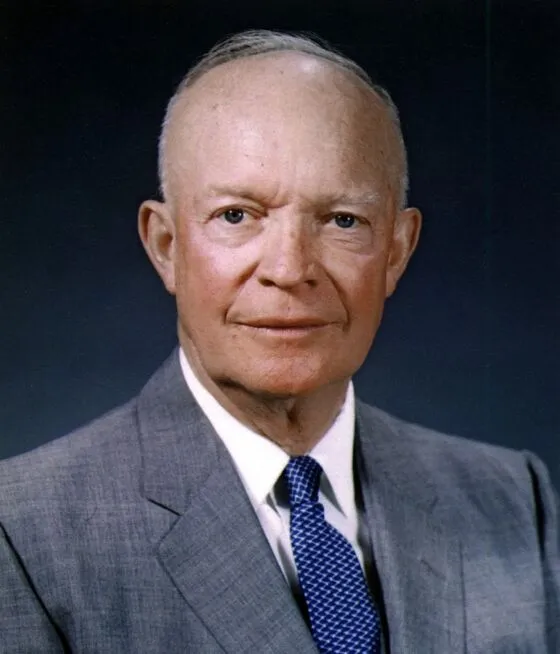
RF: While the merits of the coup are debatable, what I found fascinating was how attuned Ike was to how his legacy would be scrutinized by future scholars. Since then, I’ve had many such moments digging through presidential archives across the country, and each time it’s spellbinding to learn more about how presidents (and their staff) operate as people.
ED: How does your research shed light on America’s founding principles and history?
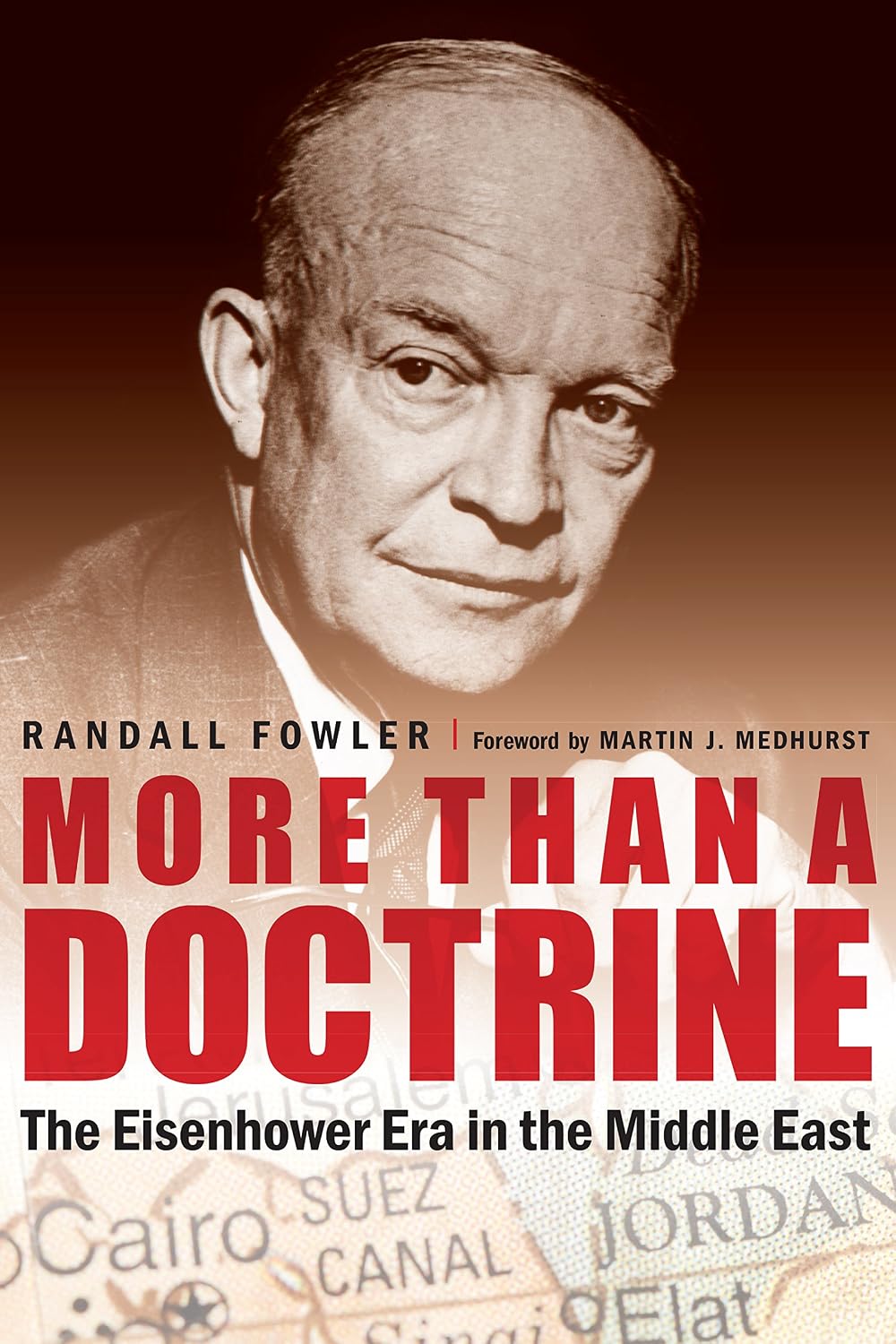
RF: As someone who studies public speeches, I not only care about the history of ideas—the works of great thinkers—but also how those ideas are understood and adopted by everyday people and political leaders. My research helps answer the question of how public figures in American life, usually but not always presidents, understood the founding principles of the United States and sought to apply those principles on the world stage.
For example, in a recent academic article I revisit Eisenhower’s farewell address to show how his discussion of the “military-industrial complex” was not simply a warning about defense contractors but marked a broader admonition to the American people to avoid technocratic capture of public institutions and policymaking bodies.
In that sense, Ike’s words should be read as a rebuke to the open-ended promises of John F. Kennedy’s inaugural address, and they remain relevant to contemporary debates about military technologies, the role of deficit spending in federal policymaking, the appropriate political role of experts in society, and even the role Americans expect former presidents to play in public life.
ED: What is one thing you wish every student knew about the American political tradition?
RF: I wish that students knew how complicated the people they’ve learned about in American history were. There’s an especially strong tendency today to reduce individuals as diverse as Frederick Douglass, Abraham Lincoln, Amelia Earhart, John Winthrop, FDR, or Ronald Reagan to flat characters in a simple drama about good guys versus bad.
The reality is that the American political tradition was forged by citizens whose lives were every bit as complex and contradictory as our own. Students who not only intellectually grasp that insight but truly internalize it are the ones who will carry this tradition forward and adapt it to the challenges of the mid-twenty-first century and beyond.
ED: As Americans prepare to celebrate the nation’s 250th anniversary, what lessons from your scholarship might help citizens reflect on the meaning of the American experiment?
RF: Lesson 1: As a public address scholar, on a general level my work shows how rhetoric is fundamental to democratic politics.
From George Washington’s Newburgh Address to Abraham Lincoln’s remarks at Gettysburg to Frederick Douglass on the fifth of July, there are few more iconic scenes of American democracy than a leader armed with nothing but their words moving the soul of the nation.
Rhetoric is an art open to all citizens, whether head of state, a former slave, or a suffragette. As a presidential scholar, I am particularly interested in retracing the power of language across the contexts of our nation’s past. This entails archival work for my books on foreign policy rhetoric as well as working to preserve voices at risk of being lost to historical memory through projects such as Recovering Democracy Archives. In every class I teach, I aim to impart this commitment to democracy by teaching students how to disagree honestly and respectfully, a disposition our nation would do well to recover at the 250th anniversary of the Declaration.
Lesson 2: While my scholarship engages a broad range of issues, my core aim is to examine how Americans have understood their place in the world relative to the Middle East. Few topics are as timely. From the earliest days of settlement, when the Puritans imagined themselves as a kind of new American Israel tasked by God to create an exceptional civilization on this continent, to the wars of the twenty-first century, which are deeply misunderstood, my work demonstrates the extent to which geostrategic calculations, Americans’ self-understanding, and political discourse are inextricably intertwined.
Because my scholarship situates the decisions made by specific presidents over Middle East security within the registers of their deliberative contexts, illuminating the interdependence of the rhetorical devices used by administrations to make sense of the world, their processes of deliberation, and their arrival at particular policy choices, it adds a much-needed layer of nuance to contemporary arguments over the blame, credit, and motives for U.S. intervention in this most troubled part of the world. At the semiquincentennial, there are few lessons more valuable than to remember that when we use language, we are never fully in control, and that our language shapes the impact of the American experiment on the world at large.
ED: Thank you for your time!
Dr. Elliott Drago serves as the JMC’s Resident Manager of Network Engagement & Resident Historian. He is a historian of American history and the author of Street Diplomacy: The Politics of Slavery and Freedom in Philadelphia, 1820-1850 (Johns-Hopkins University Press, 2022).