An interview with Susan McWilliams Barndt
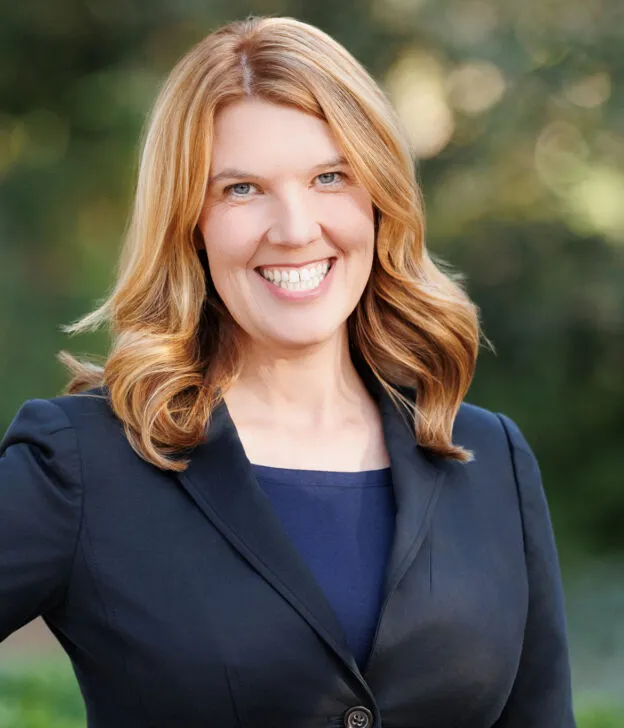
JMC Resident Historian Elliott Drago sat down with JMC Academic Council Member and Founding Civics Initiative Faculty Susan McWilliams Barndt to discuss her work on American political thought, how learning about America’s founding principles can bring out the best version of oneself, and how road trips are foundational to America’s national landscape and imagination. Dr. McWilliams is a professor of politics at Pomona College. She earned her Ph.D. in Politics from Princeton University and is an expert in classical and modern political theory as well as American political thought.
July 9, 2026
ED: What inspired you to become a scholar?
SMB: My family. My father was a political theorist. My mother is a psychoanalyst. Both have some pretty amazing books to their names. Though I didn’t know much about their work when I was a kid—I barely even knew my dad had written a book until I went to college—I did grow up in a house filled with books, where people took reading and writing and thinking very seriously. My happy childhood probably sealed my fate.
I tried a few other lines of work, but the first time I stepped into the classroom as a teacher—at the New Jersey Governor’s School for Public Issues, a free, state-run program for high school students that sadly no longer exists—I knew I’d found my calling.
ED: What is your area of specialty, and what first sparked your interest in that topic?
SMB: I study the history of American political thought. I try to pay special attention to the ways in which that thought has developed and been expressed in forms—like literature, music, popular culture, and ordinary life—that most people do not think of as political.
I’ve always been interested in this stuff! In fifth grade, I used to get in trouble for chatting too excitedly with my friend Paul during our class’s weekly current events filmstrip. We couldn’t wait to break down and try to explain everything that was happening. (Paul kept his interest in this stuff, too; he has had an amazing career as an executive and university professor in Washington, D.C.)
ED: What’s the most memorable firsthand account you’ve come across in your research?
SMB: In graduate school, I read Alexis de Tocqueville’s “Fortnight in the Wilderness”—a short account of his travels to the Michigan frontier, and which Tocqueville left out of Democracy in America. That story changed forever how I think about both American politics and political theory. It also made me fall in love with Tocqueville, who bumbles about in that story complaining about mosquitos and realizing that liberty is just as likely to make you feel anxious as it is to make you feel empowered. It’s a wild snapshot of a fleeting moment in our nation’s history.
A moral imagination
ED: How does your research shed light on America’s founding principles and history?
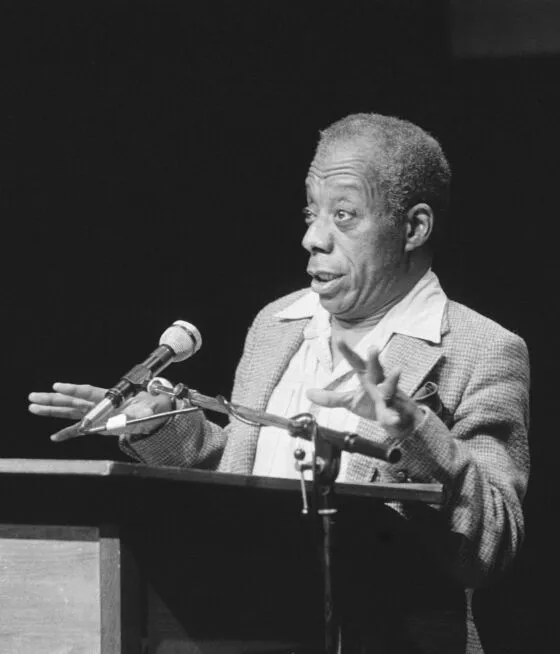
SMB: I hope that my teaching and writing help other people to see the interior life of American politics. James Baldwin once wrote that “the interior life is a real life, and the intangible dreams of people have a tangible effect on the world.” That captures so much of my own sensibility. I follow my own teacher, Eddie Glaude, in believing that moral imagination is the battleground of politics. Understanding that is key to understanding American political history, including the period we tend to call the founding.
ED: What is one thing you wish every student knew about the American political tradition?
SMB: I want all my students to understand that it is normal to be disappointed by American politics. The best and highest aspirations of this nation—toward liberty, equality, and justice for all—are impossible to achieve perfectly in practice. There is always going to be a gap between our ideals and our institutions. Americans are always going to be caught in that gap, which feel like a place of failure or frustration. Now, that doesn’t mean that the nation’s ideals are faulty, or that they’re not worth hoping and fight for. But it does mean that as a nation, we must always be doing that hoping and fighting, in the face of our nation’s incompletion. Just because you’re disappointed by the game, doesn’t mean you can stop playing.
ED: Reflecting on your journey as an award-winning educator, how has your approach to teaching changed, and which specific skills do you believe are essential for cultivating informed citizenship in your students?
SMB: A colleague of mine says, “Everyone should know enough about politics to be a little bit dangerous.” (Hat tip to Ben Dworkin, who’s now at Rowan University.) I have always liked that, and it’s one way I think about how to teach students.
I want my students to take writing, reading, speaking, and listening seriously. But I never want them to take themselves too seriously.
I want them to be generous in their approach to other people, even when (and maybe especially when) it seems like other people don’t deserve generosity.
I want them to be brave. I want them to try to see beneath the surface of things, including beneath the surface of themselves. I want them to work on becoming the best version of themselves. I want them to know that they—and their best selves—are needed by the rest of us, that their lives are bigger than themselves.
On the road with Madison
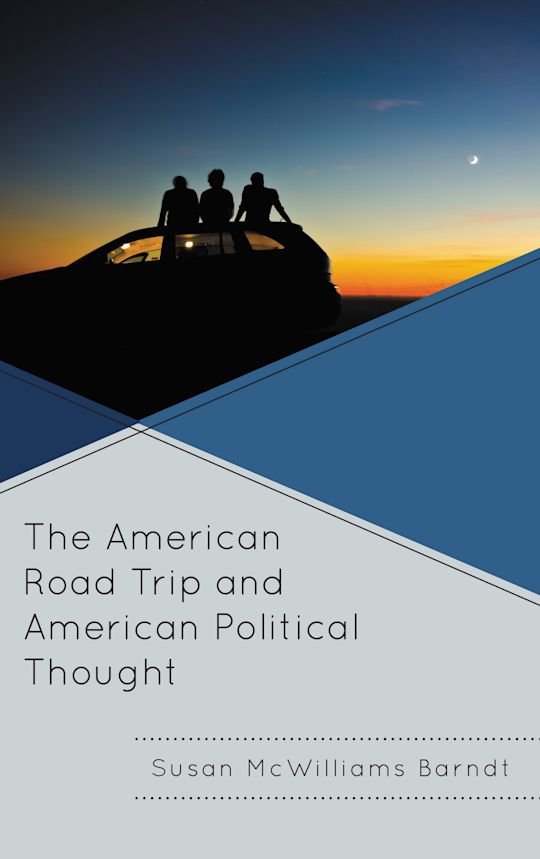
ED: Your work on road trips shows how Americans explore and experiment with political ideas. For America250, many Americans will be traveling to historic sites tied to the nation’s past. How should we understand the American road trip as a form of political thought, and what tips would you offer students of the American political tradition hoping to learn from those journeys?
SMB: Roads are so foundational to American life that we don’t think about them too much, but they were a key part of the framers’ vision for the nation! In Federalist 14, James Madison says that our constitutional system is going to depend on having an efficient system of roads to connect us. In this massive country, roads are our most common public space. Of course, that doesn’t mean that all Americans have the same experiences on roads. But roads are central to our national landscape and imagination.
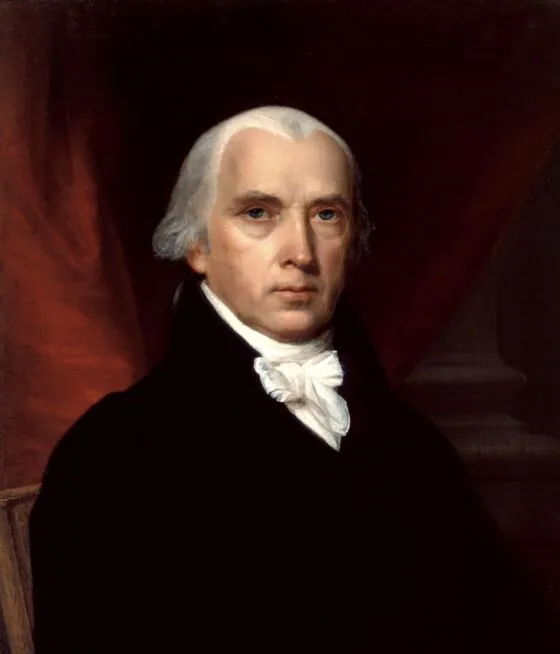
SMB: Because of this, roads have been the backdrop of many key stories about, and inquiries into, American life. Access to roads is a tangible measure of access to equality, opportunity, and mobility—in other words, the things that we think of, when we think of the American dream. Road trip stories explore this. One of the signature features of American road stories is the attention they draw to the diversity of the United States, and the blessings and challenges that attend that diversity.
For centuries, American road trips have invited us to contemplate what public membership and belonging might mean in a country that celebrates mobility and individual freedom. In other words, American road trip stories invite us to contemplate the distinctive and dynamic meanings of the terms at the center of American politics. And they’re super fun to read, watch, and contemplate.
ED: Thank you for your time!
Dr. Elliott Drago serves as the JMC’s Resident Manager of Network Engagement & Resident Historian. He is a historian of American history and the author of Street Diplomacy: The Politics of Slavery and Freedom in Philadelphia, 1820-1850 (Johns-Hopkins University Press, 2022).