
An interview with teacher Stephanie Morris
Stephanie Morris teaches Government, Economics, and World History at Fairfield Central High in South Carolina. In 2026, she enrolled in “The Bill of Rights” at Coastal Carolina University taught by Dr. Kimberly Hurd Hale and Dr. Drew Kerlowski, her first experience with JMC courses and programs.
November 10, 2026
JMC: Why did you enroll in a graduate course through the JMC Graduate Consortium?
SM: I have taught high school government for most of my career, and I am always looking for new ways to learn more about the Constitution, especially the Bill of Rights, in a way that will enhance my teaching and benefit my students. I feel like I can never stop learning, and taking a class on the Bill of Rights will directly help my students.
Also, as a teacher in South Carolina, I was intrigued and excited to learn from another South Carolina-based university.
JMC: Does your school or district provide any incentives for earning graduate credits or degrees? If so, what are they?
SM: I already have a master’s degree, so the only degree I can earn to move up on the salary scale is a doctorate. However, I teach in a rural district that requires recertification every 5 years. Graduate credits help me meet the recertification requirements, so beyond increasing my content knowledge, this course helped me meet that important requirement.
JMC: Can you describe your experience in the course?
SM: The course was in a seminar style over Zoom. That was new for me, but I ended up enjoying it very much. It helped me dig deeper into the content through open discussions where everyone could participate. The professors—Drs. Hale and Kurlowski—were very helpful in reviewing the readings and helping us see things we might have missed when doing the reading on our own.
JMC: What is the difference between traditional professional development you have completed and the JMC graduate course?
SM: Most of the professional development I have pursued has been asynchronous, and I have completed the experience on my own. This graduate course was professor-led, and the professors helped guide me throughout the process.
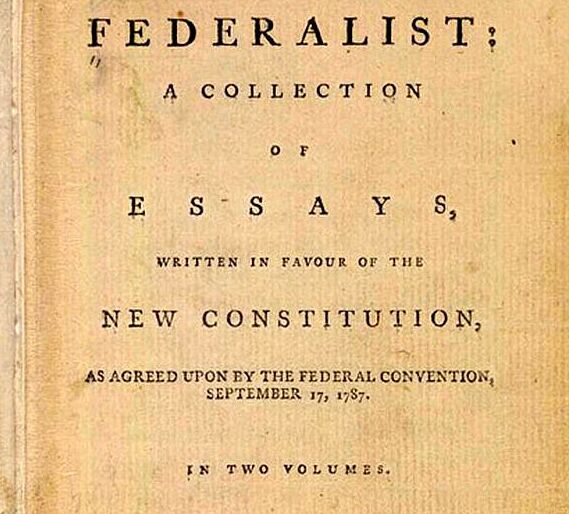
JMC: What texts from these courses have you used or will you use in your classroom?
SM: I have already planned how I want to bring selections from our readings into my own Government class, such as The Federalist Papers, John Locke, and various Supreme Court cases related to the Bill of Rights. I feel more confident in my content knowledge in these areas and my ability to teach these readings to my students now.
This course also exposed me to the importance of a discussion-based course. I learned how to lead discussions on the texts, and I plan to create opportunities for my Honors students to participate in a similar seminar-style discussion.
JMC: What did you think of the virtual course format?
SM: It worked great for me. The course was early in the morning, and I found that helpful because it provided flexibility and left the rest of the day for other study and other commitments.
JMC: Would you be interested in taking more graduate courses through the Jack Miller Center?
SM: Yes, I would. I’m a curious learner, and if I am interested in a subject—even one I may not be teaching—I am open to learning about it. The summer format also works well for a teacher’s schedule.
The Civics Foundations Graduate Consortium is a partnership of universities committed to offering graduate education opportunities to K-12 civics and history teachers. Consortium courses are taught by top scholars at universities across the country and are designed to help teachers deepen their knowledge of topics in American civics and history from the founding era to modern American political thought. The virtual courses emphasize content mastery and teaching with primary sources.