Teaching the American mind
Better civic education for students begins with content-rich courses for teachers, writes JMC’s Senior Fellow for K-12 Civics Education.
October 6, 2026
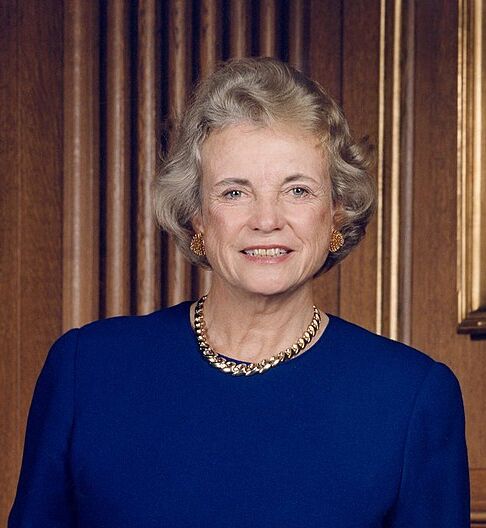
Former Supreme Court Justice Sandra Day O’Connor once described America’s deplorable lack of civic knowledge as a “quiet crisis.” Schools deemphasized teaching our founding documents to generation after generation, creating a kind of slow-motion erosion of what Thomas Jefferson called the “American mind.” Now, that crisis is no longer so “quiet.” Recent reports and studies show how dire the decline has become amongst current American K-12 students.
Yet, what O’Connor identified for students also applies to teachers, presenting a crisis of a different kind. “Who is educating the educators?” has been a question long asked and richly answered in terms of funding and political action but poorly answered in terms of substance and content. How else to explain the massive amount of state and federal funds spent on primary schooling while simultaneously observing a stark decline in civic knowledge? One recent report reviewed syllabi from public graduate schools of education and argues that progressive and critical educational theory dominates teacher training, with comparatively little emphasis on traditional classroom management, phonics, or classic books. Another shows that most social studies teachers report feeling unprepared to teach civics when they actually enter the classroom.
To reverse these trends, the Jack Miller Center’s Founding Civics Initiative created an entrepreneurial resource: The Civics Foundations Graduate Consortium. The Consortium is the nation’s first university association featuring virtual graduate degrees, courses, and certificates for K-12 teachers, provided either for free or at a significant discount due to generous donor support. Teachers can enroll in programs at universities across the nation and learn from top scholars in their fields, with a special focus on reading, understanding, and teaching primary sources. This year, teachers took courses on topics such as the “US Congress,” “How to Teach the Declaration of Independence,” “Lincoln and Douglass on Slavery, War, and the Constitution,” and “Economics of the US Constitution,” among many others.
One of the core problems facing our education system is the increasing “professionalization” it has undergone over the last several decades.
One of the core problems facing our education system is the increasing “professionalization” it has undergone over the last several decades. Many well-intentioned and intelligent teachers, especially in public schools, must manage a bureaucratized teaching environment filled with learning outcomes, credentialing requirements, classroom management and pedagogy techniques, various forms of compliance, formal evaluation structures, and more. In many schools—and in the graduate schools producing teachers—procedures and professionalization take precedence over purposeful mentorship anchored in content expertise. JMC’s Graduate Consortium exists to provide a far more humane and content-rich alternative.

Interviews with teachers and professors from the courses prove very telling. Various teachers explained how deep the content knowledge was and how applicable it was to their own classroom teaching. Teachers reported that they would now teach primary-source content learned in the Consortium in their own classes, such as Supreme Court cases related to the Bill of Rights, The Federalist’s defense of the Constitution, and Benjamin Franklin’s Autobiography, among others. These are the kinds of sources students need to understand their own, true history, and—as Abraham Lincoln explained—to perpetuate the very principles of their own regime.
After taking multiple courses with the Consortium, one high school teacher stated, “There are not many opportunities for this kind of high-level thinking and training for teachers,” and “the courses I have taken have exposed me to different disciplines, including philosophy, government, and history. Interacting with scholars of various disciplines is an invaluable opportunity.”
Likewise, many professors in the Consortium expressed gratitude for contributing to the development of teachers and, in turn, students. As one professor explained, “I hope [the teachers] realize that they are not just teaching to give grades, and instead, that the core of their work is teaching students to think about being citizens in a meaningful way. Teachers are shaping future citizens, and they have a responsibility to build this foundation for their students to achieve the promises offered to us by the Founding.” Such sentiments echo the physician-patriot Benjamin Rush, who—writing in 1787, the same year the Constitution was written—noted that “[t]o conform the principles, morals, and manners of our citizens, to our republican forms of government, it is absolutely necessary that knowledge of every kind should be disseminated through every part of the United States.”
If civic education in America is at a crisis point, what the Jack Miller Center presents invites us to reconsider the word “crisis.” In his 1858 House Divided speech, Lincoln spoke of the “crisis” America had reached in attempting to endure permanently half slave and half free. The word crisis—in its old-fashioned meaning—meant a critical “turning point,” which is very much how Lincoln used the term. Likewise, we may be at such a turning point in civic education in America today. Programs like the Civics Foundations Graduate Consortium are a critical part of the current civics’ renaissance.
The best teachers always remain students, and training these teachers in America’s founding principles and history proves essential. Students should find exemplars of informed patriotism in the home, community, and yes, the classroom. May America’s teachers take up this challenge and follow of what Chaucer said of his scholar in The Canterbury Tales: “Gladly did he learn, and gladly teach.”
Andrew D. Carico is Senior Fellow for K-12 Civics Education at the Jack Miller Center.