Posts Tagged ‘Alexander Hamilton’

James Madison GPS

Sunday, January 24th, 2010

A Jack Miller Center Pathway Essay

By George Thomas

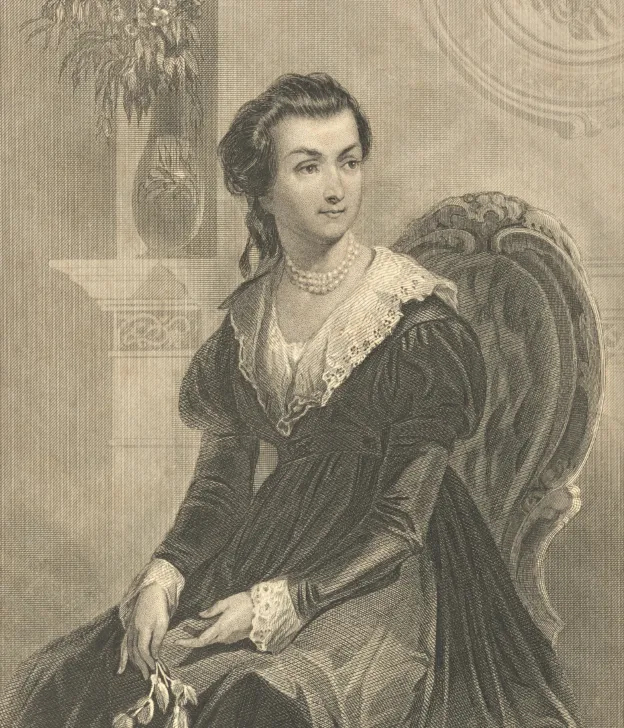
Portrait of James Madison, one of the authors ...

James Madison

Dubbed the “father of the Constitution” by the historian Charles Jared Ingersoll in 1825, James Madison resisted the title. Yet it is by this title that Madison remains best known. While biographies of the “Founding Fathers” continue to meet the public’s appetite —there have been new biographies of George Washington, Benjamin Franklin, John Adams, Thomas Jefferson, and Alexander Hamilton in recent years—books on Madison, especially those that break into the popular fold, tend to be historical studies of the early years of the Republic. Madison has become inseparable from the nation he helped bring into being.  Indeed, when the late Marvin Meyers gathered together the first comprehensive one volume edition of Madison’s writings in the early 1970s, he titled it The Mind of the Founder. And what better way to get at the bookish Madison than by reading.

First published in 1971, but brought out in paperback by the University of Virginia Press in 1990, Ralph Ketcham’s James Madison: A Biography is the best one volume biography of Madison’s life. As an early editor of the Madison Papers when the project was housed at the University of Chicago, Ketcham had access to material that was not available to earlier biographers. (Material on Madison continues to come out from the University of Virginia Press under the editorship of J.C.A. Stagg.) Ketcham’s biography not only traces Madison’s career, it gives us a sense of the man. As Madison said of his early years in Virginia under the study of Donald Robertson, who introduced him to thinkers like Montaigne and Montesquieu, “all that I have been in life I owe largely to that man.” It also captures a side of Madison that is less rarely on display (including a portrait of the beautiful Dolley Madison, who was introduced to Madison by Aaron Burr, and has also come into her own with a recent biography A Perfect Union: Dolley Madison and the Creation of the American Nation by Catherine Allgor.) The slight and frail man dressed in republican black had an impish sense of humor and was a lively presence among friends.

This should come as no great surprise. Madison led the charge in revolutionary Virginia to establish religious liberty, was the most important mind at the Constitutional Convention, joined with Alexander Hamilton to offer the great defense of the Constitution in The Federalist, crafted the Bill of Rights, and was behind the creation of political parties that helped bring about what Thomas Jefferson dubbed “the revolution of 1800”—the first peaceful transfer of power in history. To be so influential, we would expect a certain amount of persuasive character. Witnessing Madison’s exchanges with the gifted orator Patrick Henry in the Virginia ratifying convention, John Marshall called Madison the most eloquent speaker of his age. And yet, it is this very sweep that has often led to charges that Madison was inconsistent and vacillating—a lesser figure who fluctuated between the pull of Hamilton and Jefferson.  To follow Madison through this tumultuous period, one could do no better than Lance Banning’s The Sacred Fire of Liberty: James Madison and the Founding of the Federal Republic.  Banning’s book has the great virtue of reconstructing Madison’s thought from Madison’s preoccupations. The result is a Madison that is at once a skillful politician and a great thinker—he is neither Jefferson’s, nor Hamilton’s second.

If Madison was a masterful politician, he has not been seen as a great president. He left office extraordinarily popular, but history has been stern. Madison’s temperate claims of executive power make for intriguing reading against such judgments. The best history of his presidency remains Henry Adams’s History of the United States During the Administrations of James Madison first published in 1890. Adams, grandson of John Quincy Adams and great grandson of John Adams, has an overwrought sense of irony in his treatment of Madison. He is a New Englander who on occasion seems to think of Madison, like the first other four presidents who were not Adamses, as one of those damned Virginians. And, to be sure, many modern historians have offered a more rounded and sympathetic account of Madison’s presidency—even insisting the War of 1812, for all of its faults, helped sustain American independence for the long haul. Still, Adams’s great history is worth reading as it offers a detailed account of Madison’s presidency—coming in at over a 1,000 pages—and is itself one of the first great works of history written in the United States.

Madison lived beyond his contemporaries as the “last of the founders.” This from the frail youth who just after graduating from Princeton wrote that he did not expect “a long or healthy life.” Well, he lived until 1835 and witnessed the development of his handiwork for nearly another two decades. The nation returned to the issues of the 1780s and 1790s in debates over the national bank, the tariff, slavery and, most of all, nullification. Charges of inconsistency returned to haunt Madison and, a lifelong addict to politics and newspapers, Madison himself returned to the fray. Drew McCoy’s Last of the Fathers: James Madison and the Republican Legacy takes up Madison the elder statesmen, weaving together Madison’s late career with his early career in a wonderfully illuminating fashion. In McCoy’s able hands, we get a finely textured history that also happens to be a deeper education in Madison’s thought and the nature of the republic he helped birth.

Above all, Madison is an original constitutional thinker. Jack Rakove’s Original Meanings: Politics and Ideas in the Making of the Constitution is about the ideas and interests that framed the Constitution, but it is written with Madison as its central figure. Rakove captures what it means to make a constitution that is intended to endure for ages to come, but also how this begins from historical problems. When it comes to original meaning and its current application, Rakove offers somewhat ambivalent answers. But, following Madison, Rakove turns to the right questions, which are much broader than our unfortunate preoccupation with the Supreme Court and constitutional law. There is almost certainly an important lesson in the fact that Madison, our great constitutional thinker, was not a lawyer.

If you do not have the time—or is it the virtue?—for a longer book, or want only one book on Madison, you might pick up Rakove’s very brief James Madison and the Creation of the American Republic. For the republican side of Madison, you might try Colleen Sheehan’s James Madison and the Spirit of Republican Government. It’s a bit academic, but is engaging and readable; it even ends with a tribute to that great Madisonian—Harry Potter. If you are more adventurous, read Madison himself. He is imminently readable. You might be surprised how much sense and logic is packed into his short essays, and how relevant they remain for thinking about our Constitution and our politics.

George Thomas is Associate Professor of Government at Claremont McKenna College and the author of The Madisonian Constitution (Johns Hopkins).

Reblog this post [with Zemanta]

American Government, Berry College

Wednesday, October 28th, 2009

GOV 211-A, D, & E: American National Government (3.0)

Fall 2006

MWF                                                                           Office: Evans 112B

EVA                                                                            Office Hours: 10:30-12:30 MWF,

Dr. Eric C. Sands                                                         9:30-11:30 TR, and by appointment

Telephone: 238-7896 (w)                                            Email: esands@berry.edu

378-3125 (h)

Course Description:

This course provides an introduction to the ideas and institutions that constitute American political life.

Textbooks:

Ceaser, O’Toole, Bessette and Thurow, American Government: Origins, Institutions and    Public Policy.

Nichols and Nichols, Readings in American Government.

Kingdon, America the Unusual.

Additional readings can be found on the internet, with the web addresses provided in the footnotes.

Purpose:

This course is intended to familiarize students with the basic principles, institutions, and processes of American government.  Over the course of the semester, students will learn how to think critically about different facets of American politics and American political life, and will be able to contribute to arguments concerning the perennial issues and problems that the American regime confronts.

Evaluation Components and Grading Scale:

Midterm Exam – 25%

Two Papers (5 pages each) – 15% each

Final Exam – 30%

Class Participation, Reading Quizzes, and Attendance – 15%

Grading will be based on a ten-point scale (100-94 A, 93-90 A-, 89-87 B+, 86-84 B, 80-83 B-, etc.).  Please note that the failure to turn in an assignment will result in a grade of “F” for the course.

Attendance:

Attendance is mandatory.  Every unexcused absence will result in a lowering of your class participation grade.  Students missing three consecutive classes will be referred to the Office of the Registrar.

Academic Integrity:

The course is covered by the Berry College policy on academic integrity (see the Berry College Catalogue, p. 27, and the Student Handbook, pp. 15-16).  If it is determined that you have engaged in academic dishonesty, you will receive an “F” for the course. If, after reading the Berry College policy, you have questions regarding what constitutes academic dishonesty it is your responsibility to confer with me to seek clarification.

Accommodation Statement:

Students with disabilities who believe that they may need accommodation in this course are encouraged to contact the Academic Support Center in Krannert Room 329 (ext. 4080) as soon as possible to ensure that such accommodations are implemented in a timely fashion.

Schedule of Class Sessions

Week 1 (August 21) – Introduction: What founders do and the characteristics of liberal democracy.

Readings:

Selection from Plutarch’s “Life of Lycurgus”[1]

Kurt Vonnegut, Jr., “Harrison Bergeron” (N)

Week 2 (August 28) – The Concept of Founding: The Declaration of Independence, what constitutes a people, and the fundamental regime principles – liberty, equality, self-government and citizenship.

Readings:

Ceaser, chapter 2 (pp. 32-46)

Federalist 2[2]

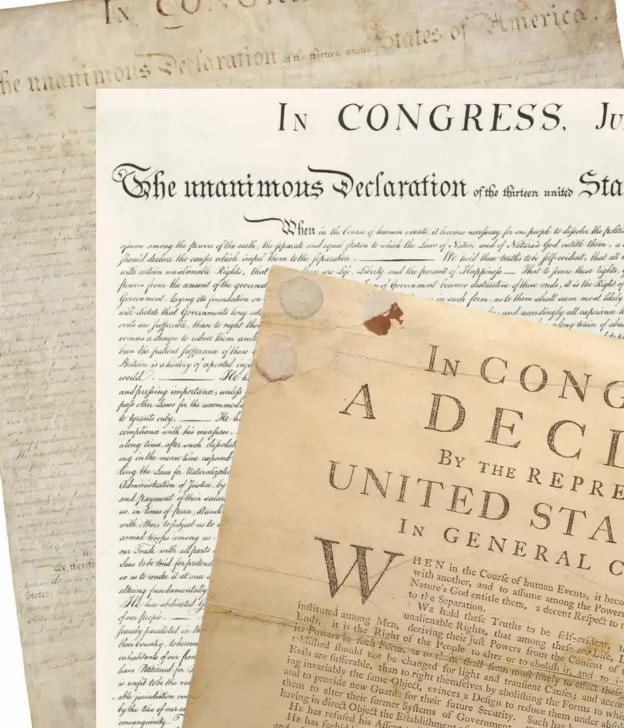
The Declaration of Independence (Ceaser, pp. 535-537)

Lincoln’s “Gettysburg Address”[3]

FDR, “State of the Union Message of 1944”[4]

Week 3 (September 4) – The Founding: the small republic argument vs. the large republic argument; or, Federalists vs. Anti-Federalists.

Readings:

Ceaser, chapter 2 (pp. 46-61)

Centinel, “The Small Republic Argument” (N)

Federalist 10, 51 (N)

Thomas Jefferson, “Against Manufacturing” (N)

Alexander Hamilton, “Report on Manufacturing” (N)

Week 4 (September 11) – A Written Constitution: Limited Government and a Bill of Rights

Readings:

“Selections from the Federal Convention” (N)

U.S. Constitution (Ceaser, pp. 539-559)

Federalist 49 (N)

Jefferson and Madison, “Exchange on the Binding of Generations” (N)

Week 5 (September 18) – Representative Democracy and Federalism

Readings:

Ceaser, chapter 4

Federalist 39, 45, 46, 63, 71 (See Footnote 2)

United States v. Lopez (1995)[5]

Week 6 (September 25) – The Role of Religion in Political Life

Readings:

Virginia Declaration of Rights[6]

Thanksgiving Day Proclamation, 1789[7]

James Madison, “Memorial and Remonstrance”[8]

Thomas Jefferson to Danbury Baptist Association[9]

Tocqueville, Democracy in America, Vol. II, part 2, chapters 2-3, 8-15[10]

Week 7 (October 2) – Political Parties, Campaigns and Elections

Readings:

Ceaser, chapter 7

2000 Election Data[11]

James Bryce, “Why Great Men Are Not Chosen Presidents” (N)

Martin Diamond, “The Electoral College and the American Idea of Democracy” (N)

James Ceaser, “Political Parties and Presidential Ambition” (N)

Week 8 (October 9) – Elections and Voting Behavior: How Do People Think about Politics?  Why Do People Vote?  Why Do People Vote the Way They Do?

Readings:

Ceaser, chapter 5, 8

David Brooks, “One Nation, Slightly Divisible”[12]

Blake Hurst, “The Plains vs. the Atlantic”[13]

Midterm Exam

Week 9 (October 16) – The Presidency

Readings:

Hamilton, “On the Presidency” (N)

Ceaser, chapters 11, 14

Ceaser, et. al., “The Rise of the Rhetorical Presidency” (N)

Week 10 (October 23) – Congress

Readings:

Ceaser, chapters 10, 12

Hamilton and Madison, “On Congress” (N)

Woodrow Wilson, “The Need for Cabinet Government in the United States” (N)

Youngstown Sheet and Tube Co. v. Sawyer (1952) (N)

William F. Connelly, “In Defense of Congress” (N)

William F. Connelly, “Congressional Government and Separation of Powers” (N)

Week 11 (October 30) – The Judiciary

Readings:

Ceaser, chapter 13

Federalist 78 (See Footnote 2)

Marbury v. Madison (1803) (N)

Brutus, “The Problem of Judicial Review” (N)

Jefferson, “Against Judicial Review” (N)

McCulluch v. Maryland (1819) (N)

Week 12 (November 6) – Judiciary and Civil Rights and Civil Liberties

Readings:

Ceaser, chapter 16

William Brennan, “Constitutional Interpretation” (N)

Robert Bork, “Testimony Before the Senate Judiciary Committee” (N)

Roe v. Wade (1973) (N)

Planned Parenthood of Southeastern Pa. v. Casey (1992) (N)

Plessy v. Ferguson (1896) (N)

Brown v. Board of Education (1954) (N)

Week 13 (November 13) – American Exceptionalism: Are We Different?

Readings:

Kingdon, America the Unusual

Week 14 (November 20) – Foreign Policy

Readings:

Ceaser, chapter 17

Pontuso, “American Foreign Policy and the Victory of Liberal Democracy” (N)

Huntington, “Clash of Civilizations”[14]

Week 15 (November 27) – Old Fears and New Horizons: Tocqueville and Fukuyama

Readings:

Alexis de Tocqueville, Selections from Democracy in America (N)

Robert Putnam, “Bowling Alone” (N)

Please note: We will not hold classes Sept. 4, 2006, in observance of Labor Day. Classes after 2 p.m. on October 6, 2006, are suspended for observance of Mountain Day.  October 16-17, 2006, is Fall Weekend and no classes are held.  No classes are held Nov. 22-24, 2006, in observance of Thanksgiving.


[1] http://classics.mit.edu//Plutarch/lycurgus.html

[2] http://www.constitution.org/fed/federa02.htm

[3] http://libertyonline.hypermall.com/Lincoln/gettysburg.html

[4] http://209.208.234.42/archives/speeches/jan1144.cfm

[5] http://www.supremelaw.org/decs/lopez/lopez.htm

[6] http://www.yale.edu/lawweb/avalon/virginia.htm

[7] http://www.earlyamerica.com/earlyamerica/firsts/thanksgiving/thankstext.html

[8] http://www.let.rug.nl/usa/P/jm4/writings/memor.htm

[9] http://www.lonang.com/exlibris/misc/danbury.htm

[10] http://etext.lib.virginia.edu/toc/modeng/public/TocDem2.html

[11] http://www.cnn.com/ELECTION/2004/pages/results/

[12] http://pages.towson.edu/sovadia/SOCI243%5COne%20Nation,%20Slightly%20Divisible.htm

[13] http://www.taemag.com/issues/articleid.17299/article_detail.asp

[14] http://www.bintjbeil.com/articles/en/d_huntington.html

Reblog this post [with Zemanta]

Michael P. Zuckert, Nancy Reeves Dreux Professor of Political Science

Monday, September 28th, 2009

University of Notre Dame

The Tocqueville Program and the Constitutional Studies project in the Political Science Department at the University of Notre Dame are important efforts, partially funded by the Jack Miller Center and its partner foundations, to increase the study of American Constitutional History and civic life. The faculty partner at the heart of this effort at Notre Dame is Michael P. Zuckert (B.A., Cornell University; Ph.D, University of Chicago, 1974).

Professor Zuckert works widely in the field of political philosophy, American constitutional law and theory, and American political thought. He has published Natural Rights and the New Republicanism and The Natural Rights Republic, which was named an outstanding book for 1997 by Choice magazine. In addition, Zuckert has published articles on a variety of topics, including George Orwell, Plato’s “Apology,” Shakespeare, and contemporary liberal theory. His most recent book is Launching Liberalism: On Lockean Political Philosophy. He is currently completing a book entitled Completing the Constitution: The Post-Civil War Amendments, is co-authoring a book on Machiavelli and Shakespeare, and has been commissioned to write the volume on John Rawls for a new series on Twentieth Century Political Philosophy . He co-authored and co-produced the public radio series Mr. Adams and Mr. Jefferson: A Nine Part Drama for the Radio and was senior scholar for Liberty!, a six hour public television series on the American Revolution. He has received grants from NEH, the Woodrow Wilson Center, Earhart Foundation and NSF, and has taught at Carleton College, Cornell University, Claremont Men’s College, Fordham University, the University of Minnesota, and the University of Michigan at Ann Arbor.

Michael Zuckert

Michael Zuckert

Professor Zuckert has a reputation as one of the best classroom teachers in the United States for both graduate and undergraduate students. He also participates as a faculty member at our Jack Miller Summer Institutes and has played a leading role in the consortium of Chicago area schools involved in the JMC Chicago Initiative.

Reblog this post [with Zemanta]